The sound of a motorcycle is deeply personal. For many riders, the factory-installed exhaust system simply does not reflect the true character of their machine. Heavy, quiet, and often bulky, stock exhausts are designed to meet strict global emissions and noise regulations. This leaves plenty of room for improvement, which is why modifying the exhaust is usually the very first change a new owner makes.
A slip-on muffler provides a highly accessible entry point into motorcycle modification. Unlike a full exhaust system that replaces every pipe from the engine block back to the tail, a slip-on does exactly what its name implies. It slips directly onto the existing mid-pipe, replacing only the final canister where the sound suppression actually happens.
Reading this guide will give you a comprehensive understanding of how these components function. You will learn about the different materials available, how they affect weight and heat dissipation, and what to look for when shopping for upgrades. Armed with this knowledge, you can make an informed decision that drastically improves your riding experience.
Understanding the Exhaust Muffler Pipe
To appreciate the value of a slip-on, you need to understand the basic anatomy of motorcycle emissions. Combusted gases exit the engine through headers. These headers merge into a collector, push through a catalytic converter, and finally travel down the exhaust muffler pipe before exiting into the atmosphere.
When you purchase a slip-on, you leave the headers and the catalytic converter completely untouched. You simply unbolt the heavy factory canister and replace it with an aftermarket alternative. Because the catalytic converter remains in place, you generally do not need to worry about complex engine tuning or altering your air-to-fuel ratio. The motorcycle’s computer will continue to read the correct exhaust values and adjust accordingly.
Replacing the exhaust muffler pipe canister immediately transforms the aesthetic of the bike. Factory mufflers are often enormous, boxy items made from cheap, heavy steel. Aftermarket slip-ons are streamlined, aggressively styled, and manufactured to complement the sharp lines of modern motorcycles.
The Benefits of Upgrading Your Muffler
Swapping out your factory canister for an aftermarket version provides several immediate advantages.
First, the weight savings are substantial. Factory systems can easily weigh upwards of 15 pounds due to internal baffling and heavy steel construction. High-quality aftermarket slip-ons often weigh less than five pounds. Shedding ten pounds from the rear of a motorcycle makes it noticeably more agile, improving cornering response and overall handling.
Second, the sound profile becomes much richer. Stock bikes often sound somewhat restricted or muffled. A quality slip-on opens up the acoustic profile, allowing the engine to produce a deeper, throatier growl. You can hear the engine RPMs more clearly, which helps with timing your gear shifts without constantly looking down at the instrument cluster.
Finally, slip-on systems are highly cost-effective. Purchasing a full titanium exhaust system can cost thousands of dollars and requires hours of labor to install. A slip-on provides 80% of the aesthetic and auditory benefits for a fraction of the cost, and you can usually install it in your own garage with basic hand tools.
Choosing the Right Materials
Manufacturers construct aftermarket mufflers from a variety of aerospace-grade materials. Your choice will dictate the price, the thermal properties, and the final look of your bike.
Below is a breakdown of the most common materials used in modern slip-on exhausts:
Material | Weight | Heat Dissipation | Durability | Price Range |
Stainless Steel | Moderate | Good | Excellent | Low to Medium |
Titanium | Very Light | Excellent | High | High |
Carbon Fiber | Ultra Light | Good (cool to touch) | Moderate | Medium to High |
Stainless steel is the workhorse of the exhaust industry. It resists rust, handles extreme vibrations, and provides a brilliant shine when polished.
Titanium offers the highest strength-to-weight ratio. It weighs significantly less than steel and dissipates heat rapidly. As titanium heats up and cools down over many heat cycles, it develops beautiful blue and purple colorations near the welds.
Carbon fiber is celebrated for its incredibly low weight and racing aesthetic. It stays relatively cool to the touch even after a long ride, which is a great safety feature if you carry passengers. However, it requires a bit more care, as the resin can degrade if exposed to improper cleaning chemicals or excessive internal heat without proper packing.
The Role of a Flexible Exhaust Muffler Pipe
In certain custom motorcycle builds or universal applications, rigidity is an obstacle. Standard rigid pipes require exact measurements, precise bends, and flawless welding to mount correctly. If a mounting bracket is even a few millimeters off, the entire system experiences stress, leading to eventual cracking.
This is where a flexible exhaust muffler pipe proves incredibly useful. These components feature interwoven metal layers that allow the pipe to bend and flex slightly during installation. They absorb harsh engine vibrations that would otherwise travel down the rigid tubing and fracture the mounting points.
Custom builders frequently rely on flexible sections when routing exhausts around tight corners or unconventional frame designs. They provide a forgiving margin of error while maintaining a secure, leak-proof seal for the escaping gases.
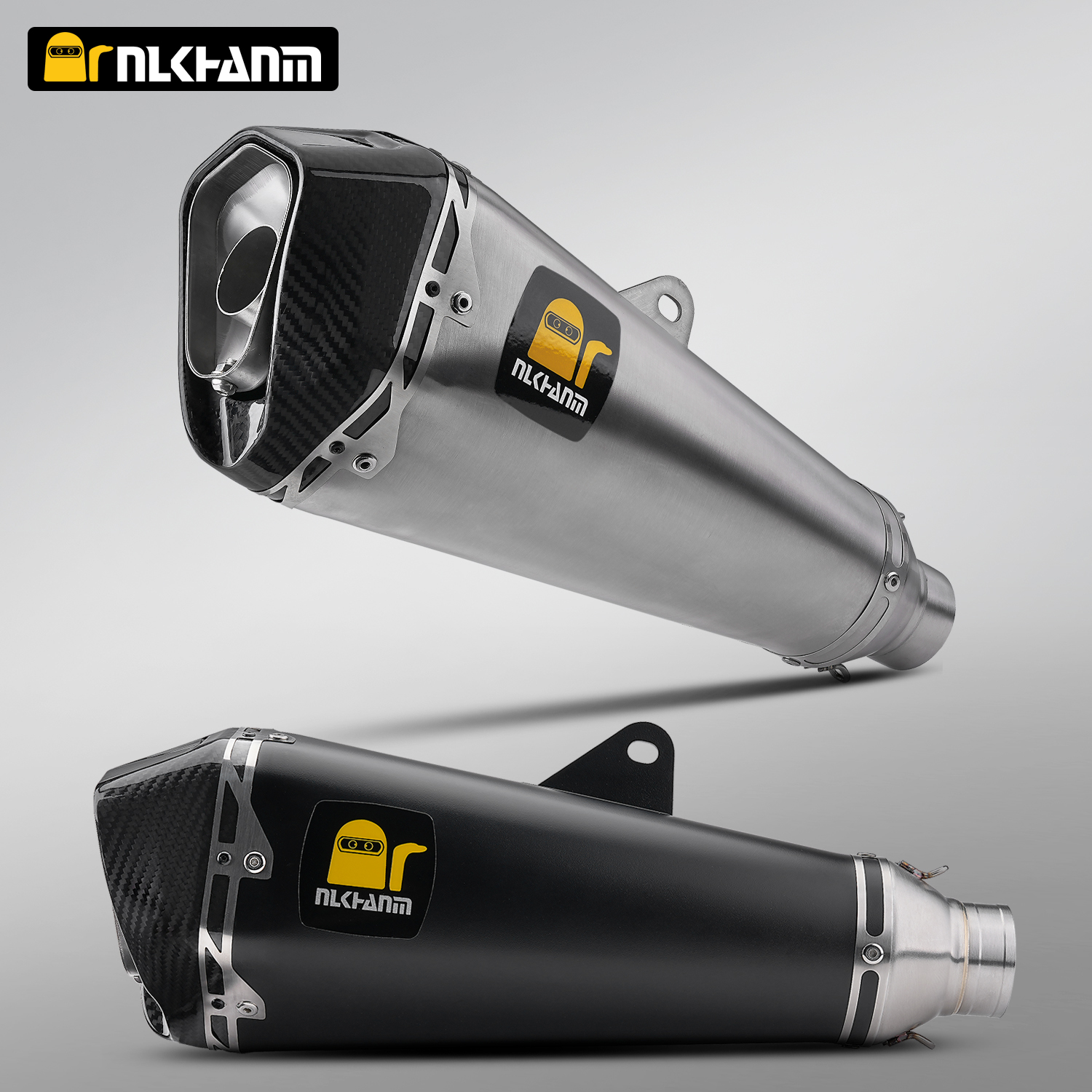
Controlling Sound With an Exhaust Muffler With Silencer
A common concern among riders is excessive noise. While a louder exhaust increases your presence on the road, an obnoxiously loud bike will quickly attract negative attention from law enforcement and annoy your neighbors.
To solve this problem, many manufacturers provide an exhaust muffler with silencer inserts, commonly referred to as DB killers. A DB killer is a small, perforated metal insert that slides into the tail end of the slip-on muffler. It works by restricting the diameter of the exhaust exit, forcing the sound waves to bounce back into the muffler's internal packing material before escaping.
Using a silencer gives you total control over your acoustic profile. You can leave the DB killer installed for daily commuting, keeping the noise level respectful and compliant with local laws. On track days or weekend rides in rural areas, you can easily remove the insert with a single screw to enjoy the raw, unrestricted sound of your engine.
Finding universal parts that offer this kind of versatility is straightforward. For a wide selection of universal and model-specific options equipped with removable DB killers, you can explore high-quality motorcycle muffler designs from reputable manufacturers.
The Installation Process
Installing a slip-on muffler requires minimal mechanical experience. The process typically takes less than an hour.
You start by loosening the primary clamp that holds the factory muffler to the mid-pipe. Next, remove the mounting bolt attaching the canister to the passenger footpeg or frame bracket. The heavy factory unit should slide right off.
Before mounting the new slip-on, clean the mid-pipe thoroughly to remove any old exhaust sealant or carbon buildup. Slide the new connection over the pipe, ensuring a snug fit. Attach the new mounting bracket loosely, then tighten the primary exhaust clamp. Finally, torque the mounting bracket bolt to the manufacturer's specified setting.
Once installed, wipe the entire new muffler down with rubbing alcohol. This removes any oils left by your hands. If you skip this step, the heat of the exhaust will permanently bake your fingerprints into the metal finish.
Frequently Asked Questions
Do I need to remap my motorcycle after installing a slip-on?
Generally, no. Because a slip-on muffler leaves the catalytic converter and oxygen sensors intact, your motorcycle's Electronic Control Unit (ECU) can still read the exhaust gases accurately. The ECU will automatically make minor adjustments to keep the engine running smoothly.
Will a slip-on muffler add horsepower?
A slip-on muffler might add a negligible amount of horsepower—usually between one and three horsepower—by slightly reducing exhaust backpressure. The primary performance benefit comes from the massive reduction in weight, rather than an increase in engine output.
How often should I repack my aftermarket muffler?
Aftermarket mufflers use fiberglass packing material to absorb high-frequency sound waves. Over time, extreme heat and pressure degrade this material, making the exhaust significantly louder and harsher. Most manufacturers recommend repacking the muffler every 10,000 miles to maintain optimal sound quality and prevent heat damage to the outer casing.
Transform Your Riding Experience
Replacing your factory exhaust with a high-quality slip-on muffler is one of the most rewarding modifications you can perform. It instantly sheds unwanted weight, cleans up the visual profile of your motorcycle, and provides a deeply satisfying engine note. By carefully selecting the right materials and utilizing sound inserts when necessary, you can customize your machine to perfectly match your riding style.
flexible exhaust muffler pipe
exhaust muffler pipe
exhaust muffler with silencer

 English
 العربية
 Français
 Русский
 Español
 Português
 Deutsch
 italiano
 日本語
日本語 한국어
한국어 Nederlands
 Tiếng Việt
 ไทย
ไทย Polski
 Türkçe
 አማርኛ
አማርኛ ພາສາລາວ
 ភាសាខ្មែរ
 Bahasa Melayu
 ဗမာစာ
ဗမာစာ தமிழ்
தமிழ் Filipino
 Bahasa Indonesia
 magyar
 Română
 Čeština
 Монгол
 қазақ
қазақ Српски
 हिन्दी
 Slovenčina
 Norsk
Norsk Svenska
 українська
 Ελληνικά
 Suomi
Suomi עברית
עברית Latine
 Dansk
Dansk বাংলা
বাংলা Hrvatski
 Afrikaans
 Gaeilge
 Māori
Māori नेपाली
 Oʻzbekcha
 Беларуская мова
 ʻŌlelo Hawaiʻi
 íslenska
 Kinyarwanda


