There are few things more satisfying than firing up a motorcycle and hearing a roar that you created with your own hands. The exhaust system defines the soul of a bike. It dictates the sound, the aesthetic lines, and the engine's performance. While factory pipes are functional, they often lack character and are restricted by strict noise emissions standards.
Building a custom exhaust is one of the most rewarding fabrication projects you can undertake. It allows you to tailor the lines of the pipe to match your specific frame—whether you are building a café racer, a chopper, or a scrambler. It also gives you complete control over the auditory experience, letting you tune that deep rumble or high-pitched scream.
However, fabricating an exhaust isn't just about welding tubes together. It requires an understanding of fluid dynamics, metallurgy, and precise fabrication skills. If you are ready to trade the generic stock look for something unique, this guide will walk you through the essential questions you need to answer to build your own system.
Why should I choose to build my own exhaust?
The primary reason most builders go the DIY route is aesthetic freedom. Buying an off-the-shelf system limits you to the manufacturer's design choices. When you build it yourself, you control the routing. You can tuck the pipes tight against the frame for lean angle clearance, or sweep them high for a scrambler look.
Beyond looks, there is the performance aspect. Stock exhausts are heavy and restrictive. By building your own, you can shave off significant weight and, if designed correctly, unlock horsepower. Finally, there is the cost factor. If you already own the necessary tools, buying raw materials is significantly cheaper than purchasing a high-end aftermarket system.
What type of custom exhaust tubing should I use?
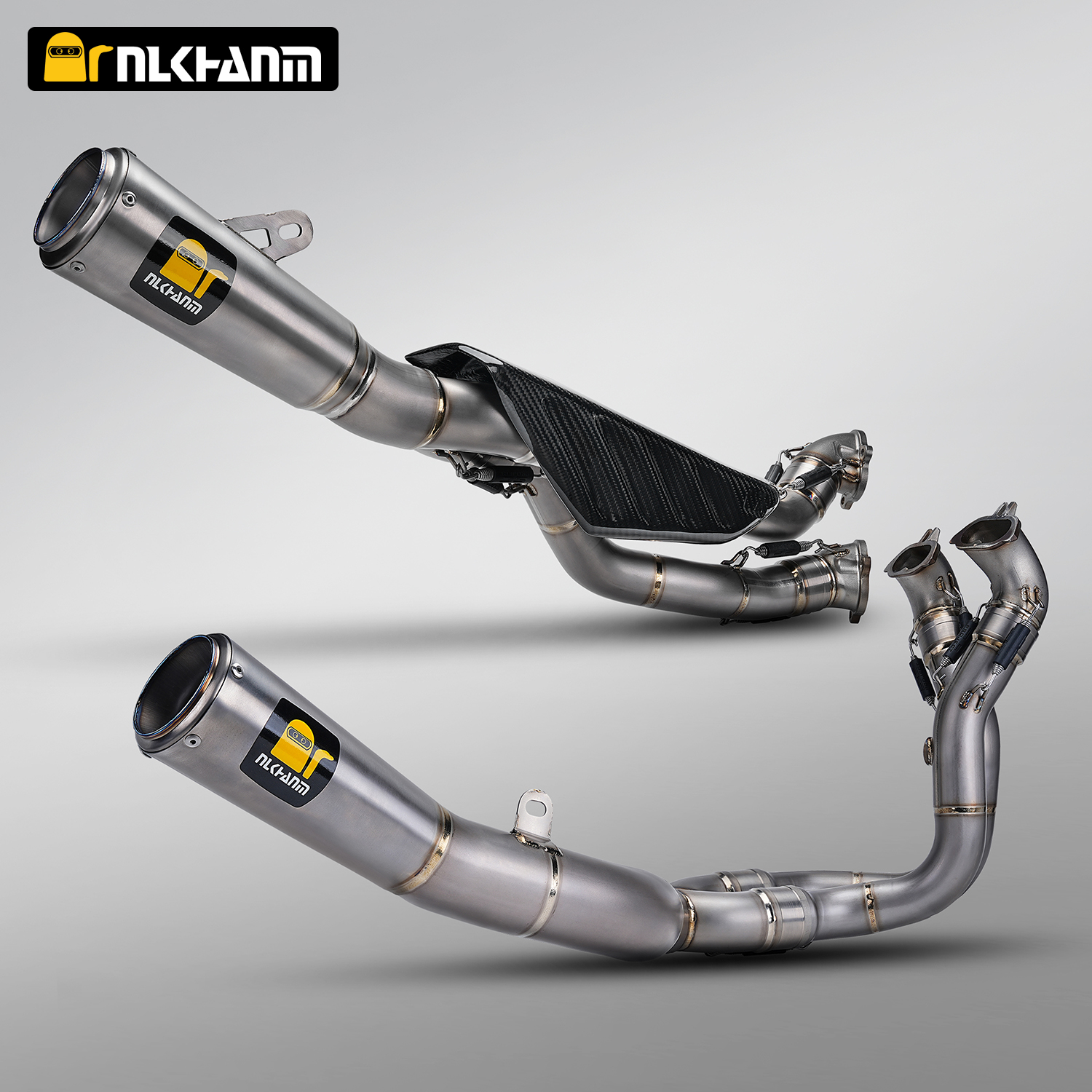
Selecting the right material is the first critical step. Your choice of custom exhaust tubing determines the durability, weight, and difficulty of the project. The three most common materials are mild steel, stainless steel, and titanium.
Mild steel is cheap and easy to weld but will rust quickly if not painted or ceramic coated. Titanium is incredibly light and turns beautiful colors when heated, but it is expensive and difficult to weld properly. For most custom builders, 304 Stainless Steel is the gold standard. It offers the best balance of corrosion resistance, cost, and workability.
Here is a breakdown of the materials to help you decide:
Material | Cost | Welding Difficulty | Rust Resistance | Best For |
Mild Steel | Low | Low | Poor (Needs coating) | Budget builds, first-time fabricators |
304 Stainless Steel | Medium | Medium | High | The industry standard for custom bikes |
Titanium | High | High | Very High | High-performance racing applications |
How do I determine the right pipe diameter?
Bigger is not always better. A common misconception is that a massive Motorcycle Exhaust Pipe will automatically increase power. In reality, an exhaust pipe that is too wide causes the exhaust gases to cool down and slow down. This reduces the "scavenging" effect, where the momentum of leaving gases helps pull fresh fuel and air into the cylinder.
If your pipe is too big, you will lose low-end torque, making the bike feel sluggish off the line. If it is too small, you create a bottleneck that chokes the engine at high RPMs. You need to find the "Goldilocks" zone—just right for your engine's displacement.
Use this general sizing chart as a starting point for your primary tubes (the pipe coming right out of the engine):
Engine Displacement (Per Cylinder) | Recommended Primary Tube Diameter |
125cc - 250cc | 1.25 inches to 1.50 inches |
250cc - 500cc | 1.50 inches to 1.75 inches |
500cc - 750cc | 1.75 inches to 2.00 inches |
750cc+ | 2.00 inches to 2.25 inches |
What tools do I need for fabrication?
You cannot build a quality exhaust with a hacksaw and duct tape. Precision is key to ensuring the flanges seal against the engine and the pipes don't rattle against the frame.
At a minimum, you will need:
A Welder: TIG welding is preferred for exhausts because it creates small, neat, and strong welds. MIG welding can work for mild steel, but it is messier.
Cutting Tool: A band saw is ideal for making perfectly square cuts. A chop saw or angle grinder with a cutoff wheel works, but requires more cleanup.
Grinder and Sander: You need to deburr the inside of the tubes after cutting to ensure smooth airflow. A belt sander helps get the tube ends perfectly flat for tight fitment.
Digital Calipers: For measuring tube diameter and wall thickness.
You generally won't bend the tubes yourself. Bending thin-wall tubing without crushing it requires an expensive mandrel bender. Instead, most builders buy pre-bent mandrel bends (U-bends and J-bends) and cut them into segments to create the desired shape.
What is the step-by-step fabrication process?
Building the system is a game of "cut, tack, check, repeat." Never fully weld a joint until the entire system is built and fitted.
1. Mock-up: Start by visualizing the path. Some builders use PVC pipe or stiff wire to create a template. This helps you see where the pipe might hit the frame, the brake lever, or your leg.
2. The Flange: Bolt the exhaust flange to the engine. Insert a short starter piece of straight custom exhaust tubing. This ensures your pipe comes out of the engine straight.
3. Piecing it together: Take your pre-bent mandrel tubes and start cutting "pie cuts" or segments that turn the pipe in the direction you want. Tape them together first to check the angle.
4. Tacking: Once you are happy with a section, use small tack welds to hold it in place. Only use enough heat to fuse the metal; you want to be able to break it loose if you make a mistake.
5. Back-Purging (For Stainless): If you are welding stainless steel, you should "back-purge" the pipe. This involves filling the inside of the pipe with argon gas while welding. This prevents "sugaring"—a crystallization on the inside of the weld that disrupts airflow.
6. Final Welding: Once the full system is tacked and fits perfectly, remove it from the bike. Weld all the seams on your workbench where you can rotate the pipe and get the best torch angles.
How do I handle backpressure and baffles?
Straight pipes look cool, but they can be painfully loud and hard to tune. Engines generally run better with some form of muffler or baffle to create a small amount of backpressure and dampen the sound.
You have two main options here. You can fabricate a muffler can packed with fiberglass matting, which smooths out the tone. Alternatively, you can install a "slip-in" baffle inside the straight pipe. This keeps the minimalist straight-pipe look but knocks the decibels down to a tolerable level and helps with engine tuning.
When should I search for "custom exhausts near me"?
Fabrication isn't for everyone. It requires patience, expensive equipment, and a steady hand. If you do not have access to a TIG welder, or if you are unsure about your ability to make airtight welds, it might be better to seek professional help.
Searching for custom exhausts near me will help you find local fabrication shops. These pros can take your design idea and execute it with professional-grade materials and welds. This is also the best route if you have a modern motorcycle with complex oxygen sensors and catalytic converters that need to be retained for legal reasons. A professional shop can ensure the bike remains compliant while still looking custom.
Ready to fire up the torch?
Building your own motorcycle exhaust is a challenge, but the payoff is huge. Every time you twist the throttle, you will hear a sound that is uniquely yours. It transforms the bike from a machine you bought into a machine you built.
Remember to take your time. Measure twice, cut once, and practice your welding on scrap metal before you touch that expensive stainless tubing. Whether you build a snarling straight pipe or a sophisticated 2-into-1 system, the result will be a centerpiece of your custom build.
custom exhaust tubing
Motorcycle Exhaust Pipe
custom exhausts near me

 English
 العربية
 Français
 Русский
 Español
 Português
 Deutsch
 italiano
 日本語
日本語 한국어
한국어 Nederlands
 Tiếng Việt
 ไทย
ไทย Polski
 Türkçe
 አማርኛ
አማርኛ ພາສາລາວ
 ភាសាខ្មែរ
 Bahasa Melayu
 ဗမာစာ
ဗမာစာ தமிழ்
தமிழ் Filipino
 Bahasa Indonesia
 magyar
 Română
 Čeština
 Монгол
 қазақ
қазақ Српски
 हिन्दी
 Slovenčina
 Norsk
Norsk Svenska
 українська
 Ελληνικά
 Suomi
Suomi עברית
עברית Latine
 Dansk
Dansk বাংলা
বাংলা Hrvatski
 Afrikaans
 Gaeilge
 Māori
Māori नेपाली
 Oʻzbekcha
 Беларуская мова
 ʻŌlelo Hawaiʻi
 íslenska
 Kinyarwanda


