Riding a motorcycle is a sensory experience. It is the wind against your jacket, the vibration of the engine, and, perhaps most importantly, the sound of the machine beneath you. The exhaust system plays a critical role in defining that character. It is not merely a pipe that expels gas; it is a component that influences performance, weight, and the acoustic signature of your bike.
Choosing the right upgrade can be daunting. The market is flooded with options ranging from budget slip-ons to high-end racing systems. Whether you are looking to shed weight from a stock bike or find a deep, throaty growl that announces your arrival, understanding the mechanics of your exhaust is essential. This guide will walk you through the essential factors to consider, ensuring you make an informed decision that enhances both your bike's performance and your riding enjoyment.
What Is the Main Function of a Motorcycle Exhaust System Muffler?
Before diving into modifications, it is helpful to understand what a stock motorcycle exhaust system muffler actually does. Its primary job is right there in the name: it muffles sound. Internal combustion engines are incredibly loud, creating high-pressure sound waves as exhaust valves open. The muffler dissipates this energy through a series of chambers and baffles.
However, a muffler does more than just keep your neighbors happy. It controls backpressure. The engine needs a specific amount of backpressure to operate efficiently at lower RPMs. If you remove the exhaust entirely, you might gain top-end power, but your low-end torque—the power you use to accelerate from a stop light—will likely suffer.
When you upgrade to an aftermarket muffler, you are essentially tuning this balance. You are often trading a bit of sound suppression for better airflow. This improved airflow allows the engine to "breathe" easier, which can result in increased horsepower and torque, provided the engine is tuned correctly to match the new airflow.
How Does Material Choice Affect Performance and Price?
One of the first decisions you will face is selecting the material. The material of your muffler dictates its weight, durability, heat retention, and cost. Most stock mufflers are made of mild steel, which is heavy and prone to rust over time. Aftermarket options usually offer superior materials that solve these issues.
Here is a breakdown of the most common materials you will encounter when shopping for a motorcycle muffler:
Material | Weight Characteristics | Durability & Heat | Cost Profile | Best For |
Stainless Steel | Moderate. Lighter than stock mild steel but heavier than titanium. | Highly durable and rust-resistant. Retains heat longer than titanium. | Mid-range. Offers the best balance of price and performance. | Daily riders and touring bikes where durability is key. |
Titanium | Extremely light. Can be 40% lighter than stainless steel. | Excellent heat dissipation (cools down fast). Can change color (blue/purple) with heat. | High. More difficult to manufacture, leading to a higher price tag. | Track bikes and riders focused on weight reduction. |
Carbon Fiber | The lightest option available. | Stays cool to the touch. Can be brittle if impacted and may fade in UV light over time. | High. A premium aesthetic with a distinctive sound resonance. | Sportbikes and riders wanting a deep sound and racing look. |
Choosing between these often comes down to budget and intended use. If you are building a track weapon where every ounce counts, titanium or carbon fiber is the logical choice. For a daily commuter or an adventure bike that might take a few hits, the rugged nature of stainless steel is often preferred.
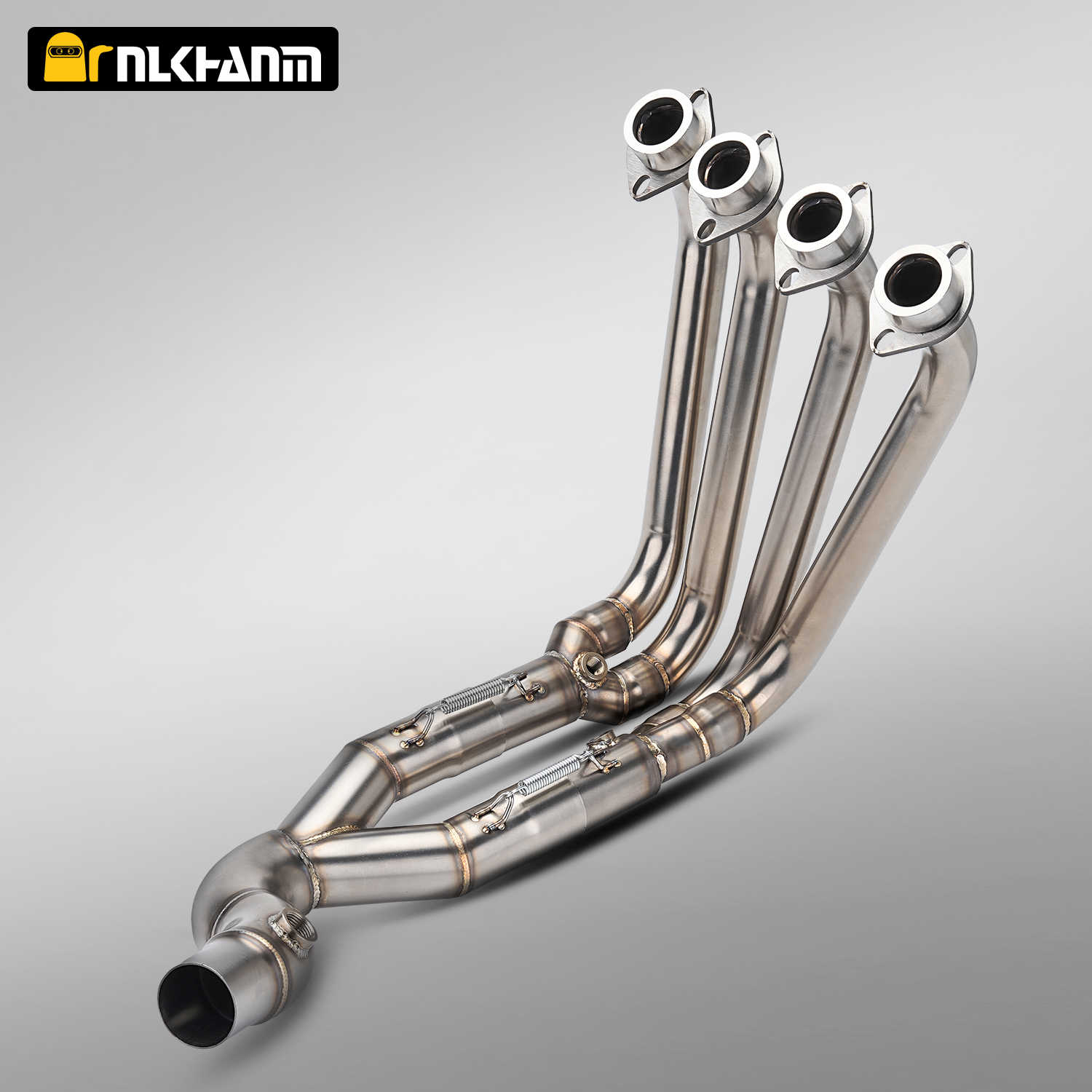
What Should I Look for in a Modified Motorcycle Exhaust Muffler?
Switching to a modified motorcycle exhaust muffler is one of the most popular upgrades for bike owners. The stock units provided by manufacturers like Honda, Kawasaki, or Yamaha are often designed to meet strict emission and noise regulations, which can leave the bike feeling choked and sounding like a sewing machine.
When shopping for a modification, consider these three pillars:
1. Weight Reduction
Stock exhausts are notoriously heavy, often containing catalytic converters and heavy steel baffling. A modified muffler can shave several kilograms off your bike. This weight is usually located high and to the rear of the bike, so removing it can significantly improve handling and center of gravity.
2. The Sound Profile
This is subjective, but crucial. Do you want a high-pitched scream typical of a 4-cylinder sportbike, or the low, rhythmic rumble of a twin? Carbon fiber mufflers often produce a deeper, mellower tone due to the material's resonance properties, while titanium and steel tend to be sharper and raspier. Always check if the muffler comes with a removable "DB killer" (decibel killer). This gives you the flexibility to dampen the sound for early morning commutes or unleash the full volume for highway rides.
3. Aesthetics
Your bike is an extension of your personality. A sleek, short-can style might suit a streetfighter build, while a longer, chrome-finished pipe fits a cruiser. Brands like Jilang offer universal mufflers that cater to various styles, ensuring the look matches the performance gains.
How Do I Know if a Motorcycle Exhaust Pipe Muffler 60mm Fits My Bike?
Sizing is the technical hurdle that trips up many buyers. You will often see specifications like "51mm inlet" or "motorcycle exhaust pipe muffler 60mm." This refers to the inner diameter of the muffler's inlet—the end that connects to your bike's mid-pipe or header.
Why does the size matter?
The diameter of the pipe affects the velocity of the exhaust gases.
51mm (2 inches): This is a standard size for many middleweight motorcycles (300cc to 600cc). It offers a good balance of flow and backpressure.
60mm - 63mm (2.3 - 2.5 inches): This larger diameter is typically found on liter-bikes (1000cc+) or high-performance modified engines. The larger opening allows for a massive volume of air to escape quickly at high RPMs.
If you put a huge 60mm muffler on a small 300cc engine, you might lose low-end torque because the gas velocity drops too much. Conversely, putting a narrow pipe on a powerful engine will restrict it, causing it to overheat and lose power.
Checking Compatibility
Before purchasing, measure the outer diameter of your bike's link pipe. If your link pipe is 51mm, a 60mm muffler will not fit without an adapter. Many universal mufflers come with adapters, but it is always safer to measure twice and buy once. If you are looking at specific models, such as for a Ducati or Yamaha, check if the system is a "Slip-On" (which attaches to existing pipes) or a "Full System" (which replaces everything from the engine block back).
Does the Brand and Bike Model Dictate the Choice?
While universal mufflers are fantastic for custom builds and budget-friendly upgrades, model-specific exhausts are engineered to fit the precise geometry of your motorcycle.
A universal muffler requires you to figure out the mounting brackets and linkage. In contrast, a system designed specifically for a Kawasaki Ninja 400 or a Honda CBR650R will line up perfectly with the factory mounting points.
When browsing for parts, you will often see categories separated by manufacturer:
For European Bikes (Ducati, BMW, KTM, Aprilia): These machines often require high-flow systems to match their high-compression engines. Aesthetics are also paramount here; carbon fiber is a common choice to match the premium bodywork.
For Japanese Bikes (Yamaha, Honda, Suzuki, Kawasaki): These bikes have massive aftermarket support. You can find everything from budget stainless steel slip-ons to full race-spec titanium systems.
For Emerging Brands (CFMOTO, Benelli, QJMOTOR): As these bikes grow in popularity, manufacturers are producing more dedicated exhaust systems to unlock the potential of these value-packed machines.
Using a dedicated supplier like Jilang Motorcycle Exhaust Systems ensures that whether you need a connector for a Vespa or a full system for a BMW, the engineering tolerances will be correct for your specific vehicle.
Ready to Upgrade Your Ride?
Selecting the perfect exhaust is a balancing act between physics, budget, and personal taste. You need to weigh the durability of stainless steel against the featherweight performance of titanium. You must decide if the improved flow of a modified motorcycle exhaust muffler gives you the power gains you seek, and ensure that a motorcycle exhaust pipe muffler 60mm is the correct size for your engine's output.
Ultimately, the right muffler transforms your motorcycle from a generic machine into something that feels and sounds alive. It is one of the most rewarding modifications you can make. If you are ready to explore high-performance options, from carbon fiber slip-ons to full titanium systems, explore the extensive catalog at Motorcycle Muffler to find the perfect voice for your bike.
Motorcycle Exhaust System Muffler
Modified Motorcycle Exhaust Muffler
motorcycle exhaust pipe muffler 60mm

 English
 العربية
 Français
 Русский
 Español
 Português
 Deutsch
 italiano
 日本語
日本語 한국어
한국어 Nederlands
 Tiếng Việt
 ไทย
ไทย Polski
 Türkçe
 አማርኛ
አማርኛ ພາສາລາວ
 ភាសាខ្មែរ
 Bahasa Melayu
 ဗမာစာ
ဗမာစာ தமிழ்
தமிழ் Filipino
 Bahasa Indonesia
 magyar
 Română
 Čeština
 Монгол
 қазақ
қазақ Српски
 हिन्दी
 Slovenčina
 Norsk
Norsk Svenska
 українська
 Ελληνικά
 Suomi
Suomi עברית
עברית Latine
 Dansk
Dansk বাংলা
বাংলা Hrvatski
 Afrikaans
 Gaeilge
 Māori
Māori नेपाली
 Oʻzbekcha
 Беларуская мова
 ʻŌlelo Hawaiʻi
 íslenska
 Kinyarwanda


