The relationship between a rider and their machine is defined by feedback. It’s the vibration through the handlebars, the lean angle in a corner, and, perhaps most importantly, the sound of the engine. For many riders, the factory-installed setup just doesn't deliver the visceral experience they crave. This is why upgrading the exhaust for motorcycles is often the very first modification a new owner makes.
But moving away from the stock setup isn't just about making noise. A high-quality aftermarket system can completely transform the character of your bike. It can shed significant weight, unlock hidden horsepower, and refine the aesthetic appeal of your ride. Whether you are riding a Ducati, Yamaha, or Kawasaki, the piping you choose dictates how your bike breathes and performs.
If you are navigating the market for the first time, the options can be overwhelming. Should you go for titanium or carbon fiber? Do you need a full system or just a slip-on? This guide answers the most common questions about motorcycle exhaust pipes to help you make the right choice for your ride.
What is the actual function of a motorcycle exhaust system?
At its core, an exhaust system is a simple plumbing solution. Its primary job is to route hot, expanding combustion gases away from the engine and the rider. However, in modern engineering, it does much more than just expel gas.
Your exhaust system plays a critical role in engine tuning. It manages backpressure—the resistance created by the exhaust flow. While too much backpressure can choke an engine, a specific amount is often necessary for optimal torque delivery, especially in the lower RPM range.
Furthermore, the exhaust system contains the muffler (or silencer), which is responsible for dampening the sound waves created by the explosions inside the combustion chamber. Stock systems are designed to meet strict noise and emission regulations, often resulting in a bulky, heavy, and restrictive design that stifles the engine's true potential.
Why should you upgrade your stock exhaust pipes motorcycle?
Most manufacturers have to compromise when building a bike. They need to keep costs down while meeting global emission standards. This usually results in stock exhaust pipes that are functional but uninspiring.
Here is why swapping out the factory unit is beneficial:
Weight Reduction: Stock exhausts are typically made of thick, heavy steel. Aftermarket systems use lightweight materials like titanium or carbon fiber, which can shave several pounds off the bike, improving handling.
Sound Quality: A performance exhaust changes the note of the engine. It creates a deeper, throatier sound that increases visibility and rider enjoyment.
Performance: By improving airflow and reducing restriction, aftermarket pipes can help the engine breathe better, resulting in better throttle response and increased horsepower.
Aesthetics: Let’s be honest—stock mufflers often look like large, clunky stovepipes. Aftermarket options are sleek and streamlined.
If you are ready to explore high-performance options, you can browse a wide range of motorcycle exhaust systems designed for brands like Honda, BMW, and KTM.
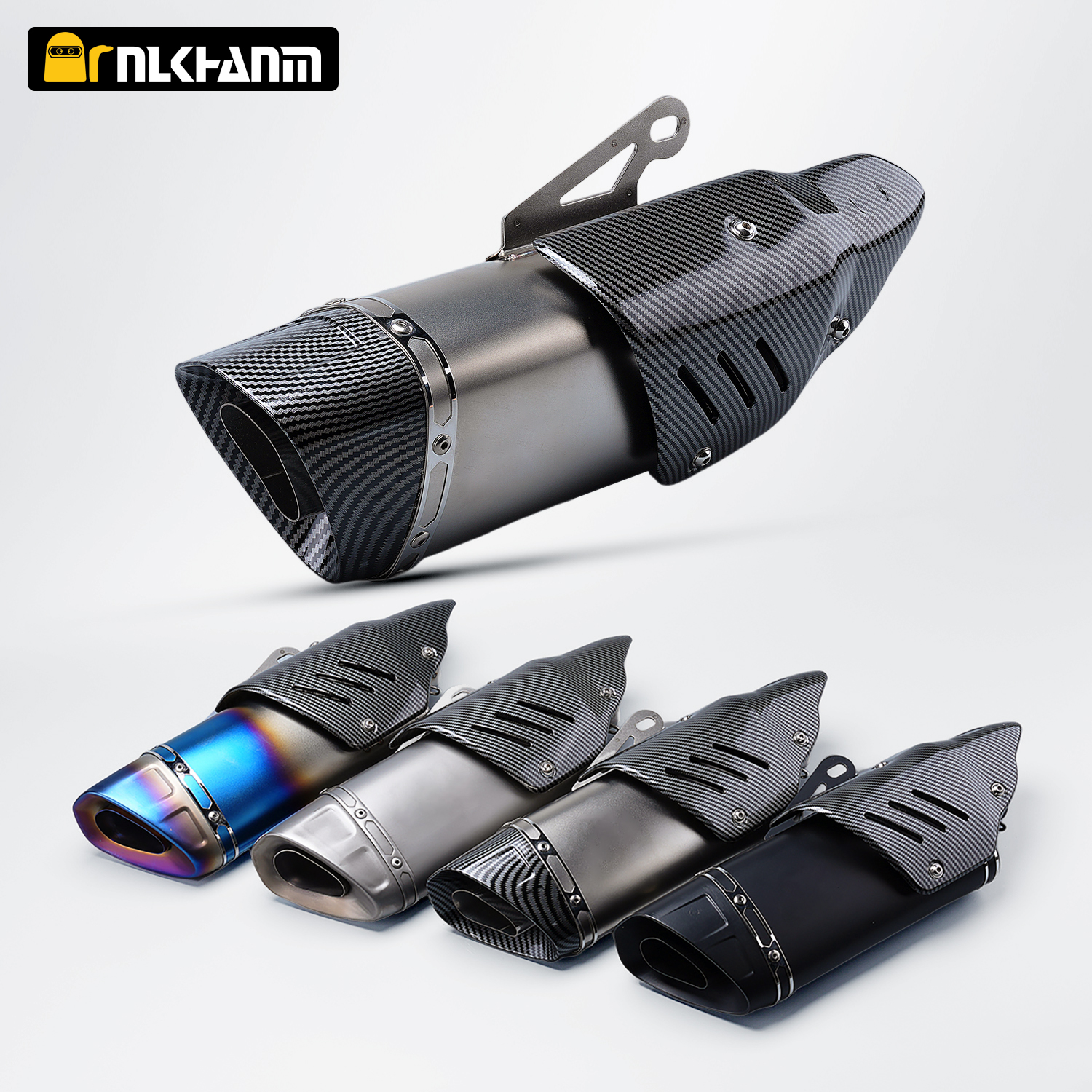
What materials are best for exhaust pipes?
When shopping for an exhaust for motorcycles, the material is the biggest factor in determining price, durability, and weight. Manufacturers generally use three main materials: Stainless Steel, Titanium, and Carbon Fiber.
Here is a breakdown of how they compare:
Material | Weight | Durability | Heat Dissipation | Cost |
Stainless Steel | Heavy | High (Resists rust/impact) | Low | Affordable |
Titanium | Very Light | High (Stronger than steel) | High (Cools quickly) | Expensive |
Carbon Fiber | Ultra Light | Moderate (Can be brittle) | Very High (Cool to touch) | Moderate/High |
Stainless Steel is the industry standard. It is tough, affordable, and won't rust easily. It is an excellent choice for riders who want durability without breaking the bank.
Titanium is the choice for racers. It offers the highest strength-to-weight ratio. When heated, titanium pipes often turn a distinct, beautiful blue or purple color.
Carbon Fiber is strictly used for the muffler canister (the outer shell) rather than the actual piping. It looks incredible and stays cool to the touch, preventing accidental burns. However, it can be more fragile than metal if the bike is dropped.
Slip-on vs. Full System: Which one do you need?
This is the most common dilemma for riders. The difference lies in how much of the original exhaust you replace.
Slip-On Exhausts
A slip-on muffler replaces just the canister at the end of the exhaust. It "slips on" to the existing mid-pipe.
Pros: easy to install, affordable, improves sound, looks better.
Cons: minimal performance gains since the restrictive catalytic converter usually remains.
Full Exhaust Systems
A full system replaces everything from the engine block back—the headers, the mid-pipe, and the muffler.
Pros: maximum weight savings, significant horsepower gains, total transformation of the bike’s look.
Cons: expensive, difficult to install, usually requires engine tuning (re-mapping).
Comparison Table:
Feature | Slip-On Muffler | Full System |
Installation | DIY Friendly (15-30 mins) | Advanced (1-2 hours) |
Performance | +1-2 HP | +5-15% HP |
Tuning Required | No (Usually) | Yes |
How does an aftermarket exhaust affect engine performance?
An engine is essentially an air pump. The more air it can intake and exhaust, the more power it can generate. When you install high-flow motorcycle exhaust pipes, you reduce the restriction that forces the engine to work harder to push gases out.
However, bolting on a pipe isn't a magic fix. Because you are changing the airflow, you often change the air-fuel ratio. A high-flow exhaust might make the engine run "lean" (too much air, not enough fuel).
To get the most out of a full system, you should pair it with an ECU flash or a fuel controller. This ensures the engine gets the right amount of fuel to match the increased airflow, preventing damage and smoothing out the power delivery.
Is it necessary to keep the dB Killer?
Many aftermarket exhausts come with a removable baffle, known as a dB killer. This is a small insert inside the muffler tip that restricts the opening to lower the noise level.
Why keep it in?
Neighbors: It keeps you in good standing with the people who live on your street.
Regulations: Many tracks and regions have strict decibel limits.
Backpressure: On some bikes, running an open pipe causes a loss of low-end torque. The dB killer restores some backpressure to keep the bike responsive at low speeds.
Why take it out?
How do you maintain your exhaust system?
Exhaust pipes for motorcycles live a hard life. They are exposed to extreme heat, road debris, rain, and tar. To keep them looking new, they require maintenance.
For stainless steel and titanium, wipe them down with a contact cleaner or WD-40 before you start the engine after installation. If you leave fingerprints on the pipe and then heat it up, the oils will burn into the metal, leaving permanent marks.
For carbon fiber, use mild soap and water. Avoid harsh chemicals that can damage the resin coat. Check the rivets and bands periodically to ensure the vibration hasn't loosened the muffler.
Choosing the right sound for your ride
Upgrading your exhaust is one of the most rewarding modifications you can make. It creates a deeper connection between you and the bike, saves weight, and improves performance. Whether you choose the durability of stainless steel, the featherweight performance of titanium, or the exotic look of carbon fiber, the right system is out there.
Always consider your riding style and local regulations before purchasing. If you are ready to find the perfect fit for your motorcycle, explore high-quality options that balance power and style.
exhaust for motorcycles
exhaust pipes motorcycle
motorcycle exhaust pipes

 English
 العربية
 Français
 Русский
 Español
 Português
 Deutsch
 italiano
 日本語
日本語 한국어
한국어 Nederlands
 Tiếng Việt
 ไทย
ไทย Polski
 Türkçe
 አማርኛ
አማርኛ ພາສາລາວ
 ភាសាខ្មែរ
 Bahasa Melayu
 ဗမာစာ
ဗမာစာ தமிழ்
தமிழ் Filipino
 Bahasa Indonesia
 magyar
 Română
 Čeština
 Монгол
 қазақ
қазақ Српски
 हिन्दी
 Slovenčina
 Norsk
Norsk Svenska
 українська
 Ελληνικά
 Suomi
Suomi עברית
עברית Latine
 Dansk
Dansk বাংলা
বাংলা Hrvatski
 Afrikaans
 Gaeilge
 Māori
Māori नेपाली
 Oʻzbekcha
 Беларуская мова
 ʻŌlelo Hawaiʻi
 íslenska
 Kinyarwanda


