You are here:Home / News / How to Build a Motorcycle Exhaust System: A Complete Guide
How to Build a Motorcycle Exhaust System: A Complete Guide
Views: 0 Author: Site Editor Publish Time: 2026-07-13 Origin: Site
Building a motorcycle exhaust system involves selecting the right material (stainless steel, titanium, or carbon fiber), choosing between a slip-on or full system, sourcing quality components, and fitting each section correctly. A well-built exhaust improves performance, reduces weight, and gives your bike a custom look and sound.
Every serious rider knows the exhaust system is one of the most impactful upgrades you can make to a motorcycle. A custom-built setup delivers better power output, a more aggressive exhaust note, and a look that sets your bike apart. Whether you're building from scratch or replacing a worn-out stock system, understanding how each component works together is the key to getting it right.
This guide walks you through the full process—from choosing materials and components to fitting your new motorcycle exhaust pipes correctly.
What Does a Motorcycle Exhaust System Actually Do?
Before picking up a wrench, it helps to understand what you're building. A motorcycle exhaust system carries combustion gases away from the engine, reduces noise, controls back pressure, and plays a direct role in how much power your engine produces.
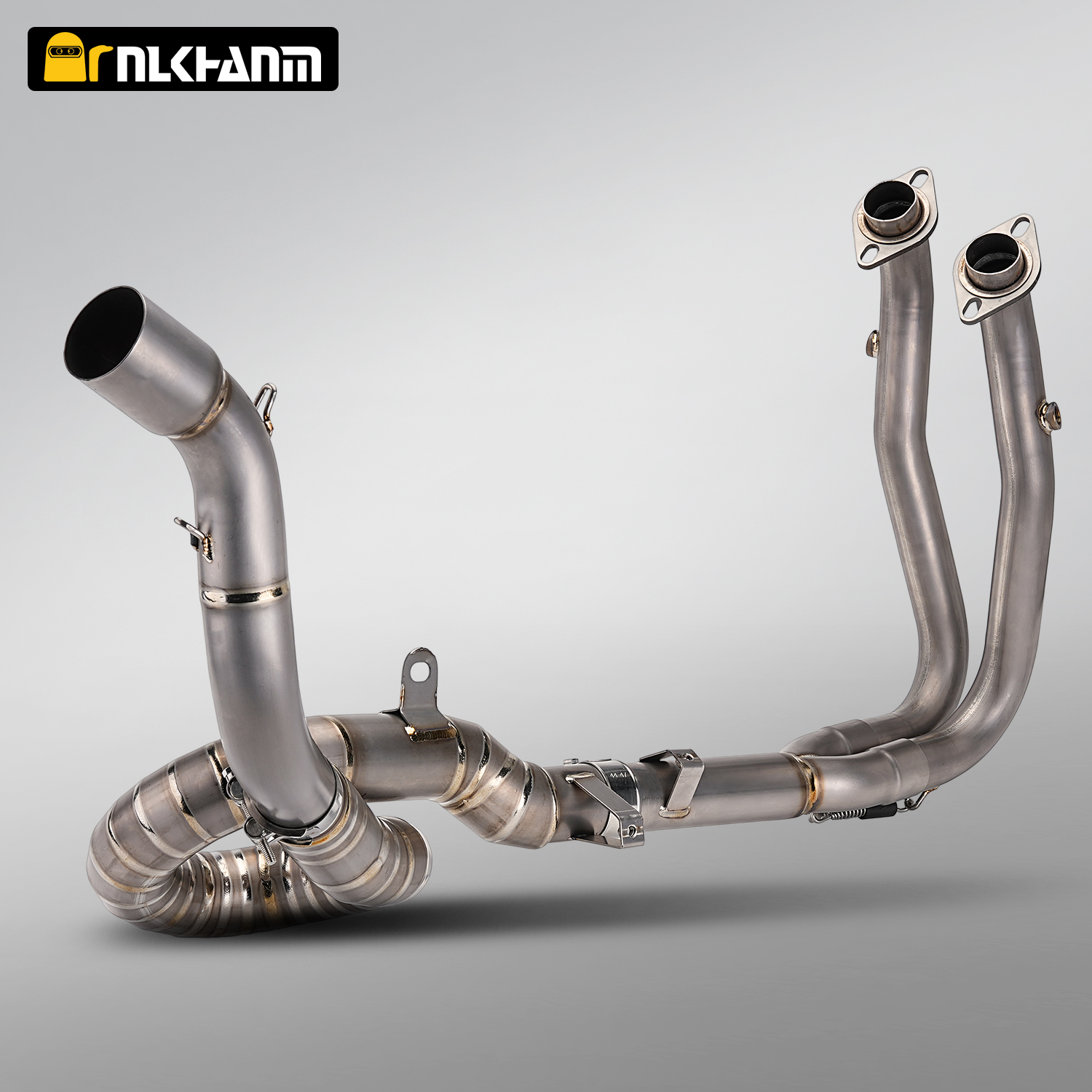
A full exhaust system includes several key parts:
Header pipes – connect directly to the engine cylinders
Mid link pipes – connect the headers to the muffler
Muffler/silencer – reduces sound and controls gas exit
DB killer – an internal baffle that further reduces noise levels
Optimizing each section of this system can meaningfully improve throttle response, mid-range torque, and top-end power.
Choosing the Right Material for Your Exhaust System
Material choice shapes everything: weight, durability, aesthetics, and cost. The three most common options are stainless steel, titanium alloy, and carbon fiber.
Material
Weight
Durability
Cost
Best For
Stainless Steel
Medium
Very High
Low–Mid
Daily riders, budget builds
Titanium Alloy
Light
High
High
Performance and track use
Carbon Fiber
Very Light
Medium
High
Muffler covers, aesthetics
Stainless steel exhaust systems are the most popular choice for a reason.Stainless steel motorcycle exhaust pipes resist corrosion, handle high heat reliably, and are significantly more affordable than titanium. For riders who want a durable, long-lasting system without a premium price, stainless steel is the logical starting point.
Titanium alloy is favored on the track and for premium street builds. Titanium exhaust systems can weigh up to 40% less than comparable stainless steel setups, which translates directly to better power-to-weight ratios. NLKHanm, a China-based full exhaust system manufacturer for motorcycles, produces titanium alloy honeycomb forged exhaust kits for models including the Kawasaki Z900, CFMOTO CLX700, and Yamaha MT15/R15 V3/V4—demonstrating how far Chinese exhaust manufacturers have come in delivering performance-grade components at competitive prices.
Carbon fiber is most commonly used for muffler shells and end caps rather than full system pipes. It looks exceptional and saves weight at the back end, but carbon fiber alone cannot withstand the sustained heat generated near the headers.
Slip-On vs. Full Exhaust System: Which Should You Build?
This is the first decision to make, and it largely depends on your goals and budget.
A slip-on system replaces only the muffler section, connecting to the existing mid pipe. Installation is straightforward, usually taking under an hour. Slip-on systems are ideal when you want better sound, a weight reduction, and improved aesthetics without a full system overhaul. NLKHanm's titanium slip-on racing line for the Kawasaki Z900 is a good example—it connects directly to the stock mid pipe, drops significant weight, and dramatically improves exhaust note.
A full exhaust system replaces everything from the headers back to the muffler exit. This is where the real performance gains happen. A properly designed full system improves exhaust gas scavenging, reduces back pressure, and can unlock meaningful power increases—especially when paired with an ECU remap or jet kit.
Choose a slip-on if cost and simplicity matter most. Choose a full system if performance is the priority.
Step-by-Step: How to Build a Motorcycle Exhaust System
Step 1: Measure and Plan Your Routing
Start by taking measurements from your exhaust port outlets to the muffler exit point. Account for bends, clearance around the engine cases, and heat shielding needs near footpegs or the rider's legs. Sketch out your routing before ordering any parts.
Most header pipes on modern motorcycles use a 51mm inner diameter—this is a common standard used by manufacturers like NLKHanm across their Kawasaki, Yamaha, and CFMOTO exhaust system ranges.
Step 2: Source Your Components
When sourcing a China full exhaust system for a motorcycle, quality control is everything. Look for manufacturers who conduct pre-production sampling and final inspection before shipment. NLKHanm, based in Guangdong Province, China, has operated in the motorcycle exhaust industry since 2016 and supplies markets across North America, South America, and Europe—following a strict process of planning, sampling, modeling, production, testing, and finalization.
Components to source include:
Header pipes (matched to your cylinder count)
Mid link or collector pipe
Muffler body (stainless steel, titanium, or carbon fiber)
DB killer insert
Mounting brackets and clamps
Step 3: Fabricate or Fit the Headers
If fabricating custom headers, use mandrel-bent tubing to preserve internal diameter through bends. Compression bends reduce flow and undercut any performance advantage. Weld carefully at all joints, and use flanges that match your engine's exhaust port spec exactly.
If using pre-fabricated headers from a classic motorcycle exhaust manufacturer or modern performance brand, test-fit each section before final installation. Headers expand significantly under heat—make sure all joints have adequate slip-fit allowance.
Step 4: Install the Mid Link Pipe
The mid link connects the header collector to the muffler inlet. On some builds, this section includes a catalytic converter or oxygen sensor bung. Align the mid link carefully; misalignment here puts stress on every other joint in the system.
Step 5: Mount the Muffler
Position the muffler at the correct angle and height, then mark and fabricate your mounting bracket. The bracket should be rigid but include a rubber isolator to absorb vibration. Tighten all clamps to manufacturer torque specifications—stainless steel bolts are prone to galling, so use an anti-seize compound on all threaded fasteners.
Step 6: Install a DB Killer if Required
Many aftermarket exhaust systems—particularly titanium and carbon fiber setups—come supplied with a DB killer insert. This is a removable baffle that reduces sound levels for road use. NLKHanm includes DB killers with several of their CFMOTO and Triumph exhaust kits. Install it for street riding and remove it for track days.
Step 7: Check for Leaks and Clear-Out
Once the system is fully installed, start the engine cold and listen for exhaust leaks at every joint. Look for sooty deposits around flanges and clamps. Any leak will hurt performance and create an unpleasant smell. Run the engine until it reaches full operating temperature, then re-check and retorque all fasteners—thermal cycling will settle the joints.
What to Look for When Choosing a Classic Motorcycle Exhaust Manufacturer
Model-specific fitment – not just universal parts with adapters
Multiple material options – stainless steel, titanium, and carbon fiber
Pre-production sampling – so you know the product is tested before mass production
Global shipping support – with accepted terms like FOB, CIF, and DDP for international buyers
After-sales communication – email, WhatsApp, and responsive support channels
NLKHanm covers exhaust systems for brands including Kawasaki, Yamaha, Ducati, Aprilia, Honda, Suzuki, BMW, KTM, CFMOTO, and more—making them one of the broader-catalog Chinese full exhaust system manufacturers currently serving the global market.
Ready to Build Your Ideal Exhaust Setup?
A well-built motorcycle exhaust system delivers more than just sound. Better performance, reduced weight, and a custom appearance all follow from selecting the right components and fitting them correctly. Start with your material choice, decide between slip-on and full system, and source parts from a manufacturer with proven quality control.
For model-specific stainless steel exhaust systems, titanium alloy kits, and carbon fiber mufflers, explore NLKHanm's full range at nlkhanm.com or contact their team directly via email at nlkhanmmoto@outlook.com or WhatsApp at +86 147 3752 8679.
Frequently Asked Questions
What is the best material for a motorcycle exhaust system?
Stainless steel is the best all-around material for most riders—durable, corrosion-resistant, and cost-effective. Titanium alloy is the better choice for performance builds where weight reduction is a priority, typically saving up to 40% over comparable stainless steel setups.
What is the difference between a slip-on and a full motorcycle exhaust system?
A slip-on replaces only the muffler and connects to the existing mid pipe. A full exhaust system replaces headers, mid link, and muffler from the engine back. Full systems deliver greater performance gains; slip-ons are easier to install and more affordable.
Are Chinese motorcycle exhaust manufacturers reliable?
Quality varies by manufacturer. Established Chinese full exhaust system manufacturers like NLKHanm—operating since 2016 with self-funded factories and a documented production process—supply markets across North America, Europe, and South Asia with model-specific exhaust kits that meet international quality standards.
What pipe diameter is standard for motorcycle exhaust systems?
51mm is the most common inner diameter for mid link and muffler connection pipes across a wide range of modern motorcycles. Always verify the spec for your specific model before purchasing components.
Do I need to remap my ECU after installing a new exhaust?
For slip-on systems, an ECU remap is often optional but recommended for optimal performance. For a full exhaust system—especially one with a free-flowing header design—remapping the fuel injection or carburetor jetting is strongly advised to prevent a lean air-fuel mixture.

 English
 العربية
 Français
 Русский
 Español
 Português
 Deutsch
 italiano
 日本語
日本語 한국어
한국어 Nederlands
 Tiếng Việt
 ไทย
ไทย Polski
 Türkçe
 አማርኛ
አማርኛ ພາສາລາວ
 ភាសាខ្មែរ
 Bahasa Melayu
 ဗမာစာ
ဗမာစာ தமிழ்
தமிழ் Filipino
 Bahasa Indonesia
 magyar
 Română
 Čeština
 Монгол
 қазақ
қазақ Српски
 हिन्दी
 Slovenčina
 Norsk
Norsk Svenska
 українська
 Ελληνικά
 Suomi
Suomi עברית
עברית Latine
 Dansk
Dansk বাংলা
বাংলা Hrvatski
 Afrikaans
 Gaeilge
 Māori
Māori नेपाली
 Oʻzbekcha
 Беларуская мова
 ʻŌlelo Hawaiʻi
 íslenska
 Kinyarwanda