When you twist the throttle, you feel the acceleration and hear the roar, but few riders stop to consider the complex engineering happening beneath their boots. The exhaust pipe isn't just a simple chimney for smoke; it is a sophisticated component critical to your engine's ability to breathe, produce power, and manage heat.
An engine is essentially an air pump. It sucks air in, mixes it with fuel, ignites it, and then needs to push the byproduct out as fast as possible. If the spent gases cannot escape efficiently, the engine cannot take in a fresh breath for the next cycle. This process determines how much horsepower and torque your bike generates. Understanding the mechanics behind this airflow helps you make better decisions about maintenance and upgrades, ensuring your ride runs at its peak potential.
What is the primary function of a motorcycle exhaust system?
At its core, amotorcycle exhaust system performs three critical tasks: venting hot combustion gases away from the engine (and the rider), reducing noise levels, and tuning the engine's performance characteristics.
When the exhaust valve in the engine cylinder opens, hot gas rushes out at high pressure. The exhaust system must capture this gas and guide it out to the rear of the bike. However, the most vital function for performance is "scavenging."
Scavenging works on the principle of pressure waves. When a pulse of high-pressure gas travels down the pipe, it leaves a low-pressure vacuum behind it. This vacuum helps pull the remaining exhaust gases out of the cylinder and actually sucks the fresh intake charge into the combustion chamber for the next cycle. A well-designed system synchronizes these pulses to maximize engine efficiency at specific RPM ranges.
What are the key components involved?
While it looks like a single metal tube, the system comprises several distinct parts, each with a specific job. Understanding these components clarifies how the entire unit functions.
Component | Function | Location |
Header Pipes | The first point of contact. They collect gases directly from the engine's cylinder head. | Attached to the engine block. |
Collector | Merges pipes from multiple cylinders into fewer pipes (e.g., 4-into-1). | Located under the engine. |
Mid-Pipe | Connects the headers/collector to the muffler. Often houses the catalytic converter. | Between the engine and rear wheel. |
Catalytic Converter | Uses chemical reactions to convert harmful pollutants into less harmful gases. | Usually inside the mid-pipe or collector. |
Muffler (Silencer) | Reduces noise volume through baffles or absorption materials. | At the very end of the system. |
How does the shape and length affect performance?
You might notice that different bikes have vastly different pipe shapes. This is not just for aesthetics; it is pure physics. The diameter and length of the pipe determine the timing of the pressure waves mentioned earlier.
Longer, narrower pipes typically boost low-to-mid-range torque. They keep the gas velocity high at lower engine speeds, which helps scavenging when you are cruising or accelerating from a stop. Conversely, shorter, wider pipes are generally tuned for high-RPM horsepower. They allow massive amounts of gas to escape quickly when the engine is screaming at the redline.
This is why swapping out a stock system for an aftermarket one can drastically change how the bike feels. If you install a system that is too wide, you might lose that punchy feeling at low speeds because the gas velocity drops, reducing the scavenging effect.
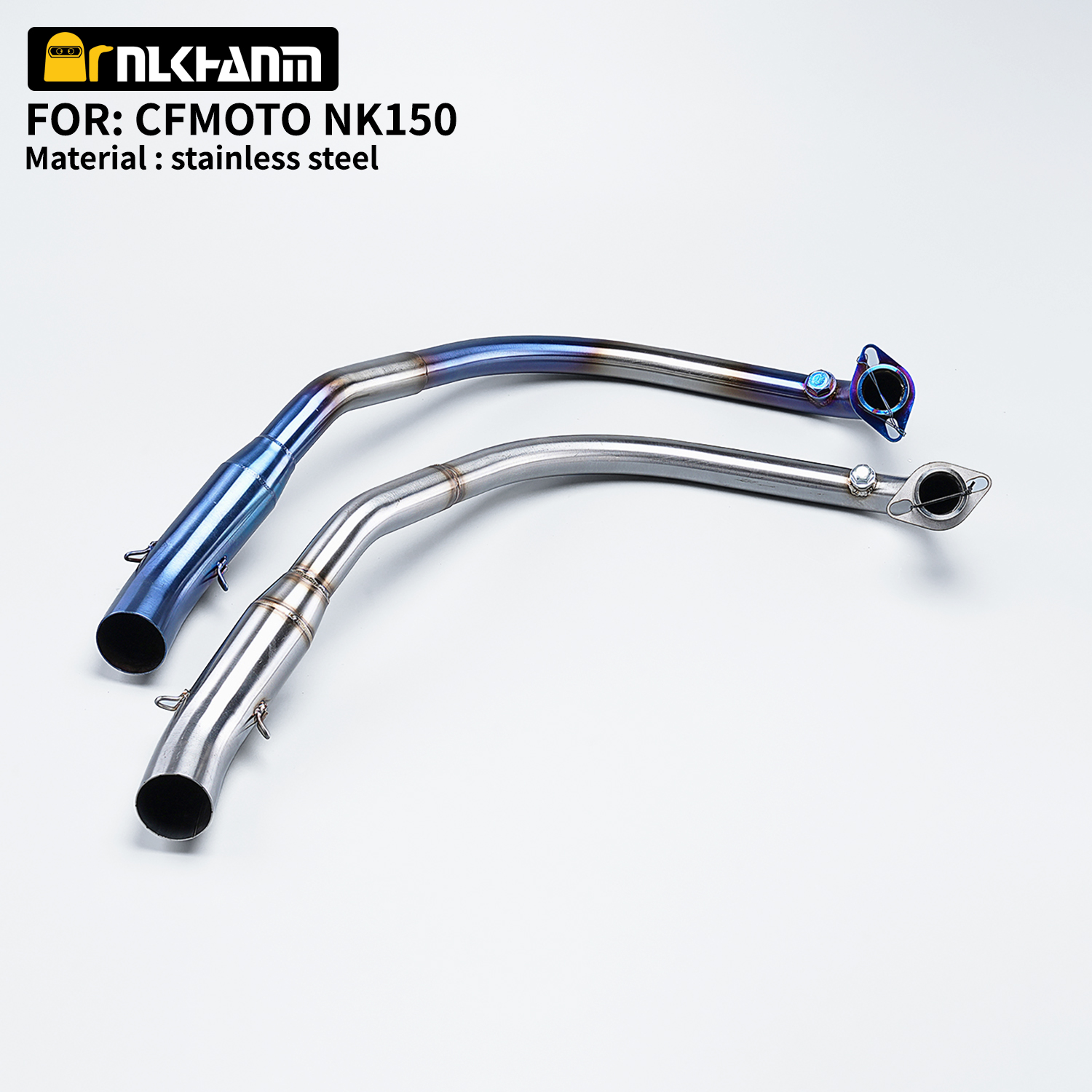
What materials are used by a motorcycle exhaust manufacturer?
Heat, pressure, and vibration create a harsh environment for exhaust components. Manufacturers must choose materials that can survive these conditions while keeping weight down. The three most common materials are mild steel, stainless steel, and titanium.
Mild Steel is the most affordable but is prone to rust if not coated with ceramic or chrome. It is heavy but durable.
Stainless Steel offers a great balance of durability and rust resistance. It is the industry standard for quality aftermarket pipes.
Titanium is used for high-performance applications. It is incredibly strong and significantly lighter than steel, which improves the bike's handling by reducing unsprung weight.
Choosing the right supplier matters. For example, Jilang Company is a motorcycle exhaust manufacturer that specializes in these high-grade materials. With a professional team of 50 people, including experienced engineers, they focus on creating high-performance stainless steel and titanium products. Their mature supply chain ensures that the materials used can withstand the extreme thermal stress of high-performance riding.
How does the muffler actually silence the sound?
The explosion of fuel inside the cylinder creates a massive sound wave. If you ran an engine with open headers (no muffler), the noise would be deafening. The muffler's job is to dissipate this sound energy without blocking the airflow too much.
There are two main ways this happens:
Reflection: Inside the muffler, the air is forced through a maze of chambers and baffles. The sound waves bounce off these walls and cancel each other out through destructive interference. This is common in stock exhausts (OEM) because it is very effective at meeting strict noise regulations.
Absorption: Performance mufflers often use a straight-through perforated pipe wrapped in packing material (like fiberglass or steel wool). As the gas passes through, the sound waves expand into the packing material, which absorbs the high-frequency energy. This results in a deeper, throatier tone and less restriction on the airflow.
Why consider upgrading your motorcycle exhaust systems?
Many riders look to the aftermarket for a replacement system shortly after buying a bike. While the factory system is functional, it is often designed with budget constraints and strict emissions compliance as the top priorities, rather than pure performance or weight savings.
Upgrading offers several distinct advantages:
Weight Reduction: Factory exhausts are often heavy, sometimes weighing over 15 pounds. A titanium or carbon fiber system can shave off significant weight, improving the power-to-weight ratio.
Heat Management: Aftermarket systems, especially those without heavy catalytic converters, often flow better and hold less heat near the engine.
Sound and Aesthetics: Let’s be honest—sound matters. A proper system gives the bike a signature character.
Companies like Jilang Company cater to this need by providing innovative designs for both domestic and overseas customers. Their team utilizes strict quality standards to ensure that when you upgrade, you are getting a part that fits perfectly and performs reliably.
Does the exhaust system affect fuel economy?
Yes, it does. Because the exhaust system dictates how efficiently the engine breathes, it directly impacts fuel consumption. A restrictive exhaust forces the engine to work harder to push gases out, wasting energy.
However, simply bolting on a high-flow exhaust won't automatically save gas. If the exhaust allows significantly more air to flow, the engine's fuel map needs to be adjusted (often called "re-jetting" carbs or "remaping" the ECU). If you flow more air without adding more fuel, the bike runs "lean," which can cause overheating. If tuned correctly, a high-quality exhaust system can actually improve efficiency at cruising speeds.
Ready to improve your ride?
Your motorcycle's exhaust is more than a metal tube; it is a finely tuned instrument that balances pressure, heat, and sound. Whether you are looking for the durability of stainless steel or the lightweight performance of titanium, understanding the mechanics helps you appreciate the ride.
If you are considering an upgrade or need a replacement, look for a reputable manufacturer with engineering expertise. A well-made system transforms the riding experience, turning combustion into power and noise into music.
motorcycle exhaust system
motorcycle exhaust systems
motorcycle exhaust manufacturer

 English
 العربية
 Français
 Русский
 Español
 Português
 Deutsch
 italiano
 日本語
日本語 한국어
한국어 Nederlands
 Tiếng Việt
 ไทย
ไทย Polski
 Türkçe
 አማርኛ
አማርኛ ພາສາລາວ
 ភាសាខ្មែរ
 Bahasa Melayu
 ဗမာစာ
ဗမာစာ தமிழ்
தமிழ் Filipino
 Bahasa Indonesia
 magyar
 Română
 Čeština
 Монгол
 қазақ
қазақ Српски
 हिन्दी
 Slovenčina
 Norsk
Norsk Svenska
 українська
 Ελληνικά
 Suomi
Suomi עברית
עברית Latine
 Dansk
Dansk বাংলা
বাংলা Hrvatski
 Afrikaans
 Gaeilge
 Māori
Māori नेपाली
 Oʻzbekcha
 Беларуская мова
 ʻŌlelo Hawaiʻi
 íslenska
 Kinyarwanda


