There are few sounds as distinct as a motorcycle engine coming to life. For some, it is a roar of power; for others, it is a finely tuned mechanical symphony. But have you ever stopped to consider what is actually happening inside that chrome or carbon fiber canister to produce that sound?
The motorcycle muffler is often an underappreciated component, dismissed simply as a noise-dampening tube. However, its role goes far beyond volume control. It is a critical piece of engineering that influences engine performance, fuel efficiency, and weight distribution. Whether you are riding a high-performance Ducati or a reliable Honda commuter, the muffler is working hard to manage the violent pulses of hot gas escaping your engine.
Understanding the mechanics behind this component can help you make better decisions when maintaining your bike or upgrading to aftermarket parts, such as those offered by Jilang Motorcycle Exhaust Systems.
What is the basic function of a motorcycle muffler?
At its core, an internal combustion engine is an air pump. It sucks air in, mixes it with fuel, explodes it, and pushes it out. That explosion creates a high-pressure wave of gas. If this gas were released directly into the atmosphere without any restriction, it would create an incredibly loud, sharp crack—similar to a firearm discharge.
The muffler serves two primary purposes:
Acoustic Management: It manipulates the sound waves to reduce volume and tune the "note" of the exhaust.
Engine Tuning: It helps manage backpressure, which is essential for the engine to run smoothly across different RPM ranges.
How do mufflers physically reduce noise?
To understand how a muffler works, you have to understand sound waves. Sound travels in pressure waves. The muffler uses specific internal geometries to disrupt, absorb, or cancel out these waves. Generally, mufflers fall into two categories: Reactive and Absorptive.
Reactive Mufflers (The Chambered Approach)
Reactive mufflers are commonly found on stock motorcycles where noise regulations are strict. Inside the canister, there is a maze of tubes and chambers separated by metal plates (baffles).
When the sound wave enters the muffler, it is forced to bounce around these chambers. By calculating the size of the chambers precisely, engineers can force sound waves to collide with each other. When a "peak" of one wave meets the "valley" of another, they cancel each other out. This is known as destructive interference.
Absorptive Mufflers (The Straight-Through Approach)
Absorptive mufflers are the design of choice for performance enthusiasts and aftermarket manufacturers like Jilang. These are often referred to as "straight-through" or "glasspack" mufflers.
In this design, a perforated tube runs straight through the center of the canister. Surrounding this tube is a layer of sound-absorbing material, typically fiberglass, steel wool, or ceramic matting. As the exhaust gas passes through the perforated pipe, the sound waves expand through the holes and are trapped by the packing material. This absorbs the high-frequency sound energy, converting it into heat, while allowing the gas to flow with less restriction. This results in the deep, throaty rumble associated with aftermarket exhausts.
What materials are mufflers made from?
The material of your muffler dictates its weight, heat retention, durability, and cost. High-quality manufacturers typically offer three main options.
Comparison of Exhaust Materials
Material | Weight | Durability | Heat Dissipation | Cost | Best For |
Stainless Steel | Heavy | Excellent | Moderate | Low/Medium | Daily riders, touring, budget builds |
Titanium | Very Light | High | Excellent | High | Racing, performance street riding |
Carbon Fiber | Ultra Light | High (if maintained) | Low (stays cool) | High | Sportbikes, aesthetics, weight reduction |
Stainless Steel: This is the industry standard for durability. Jilang’s steel exhaust mufflers are robust and resistant to rust, making them ideal for all-weather riders.
Titanium: Titanium offers the strength of steel but at roughly half the weight. When heated, titanium pipes often turn a distinct blue or purple hue, which many riders find visually appealing.
Carbon Fiber: These mufflers use a carbon fiber outer shell. They are incredibly light and, unlike metal, they do not retain heat well, meaning they are less likely to burn you if you accidentally brush against them after a ride. However, they require high-quality resins to withstand the internal heat of the exhaust gases.
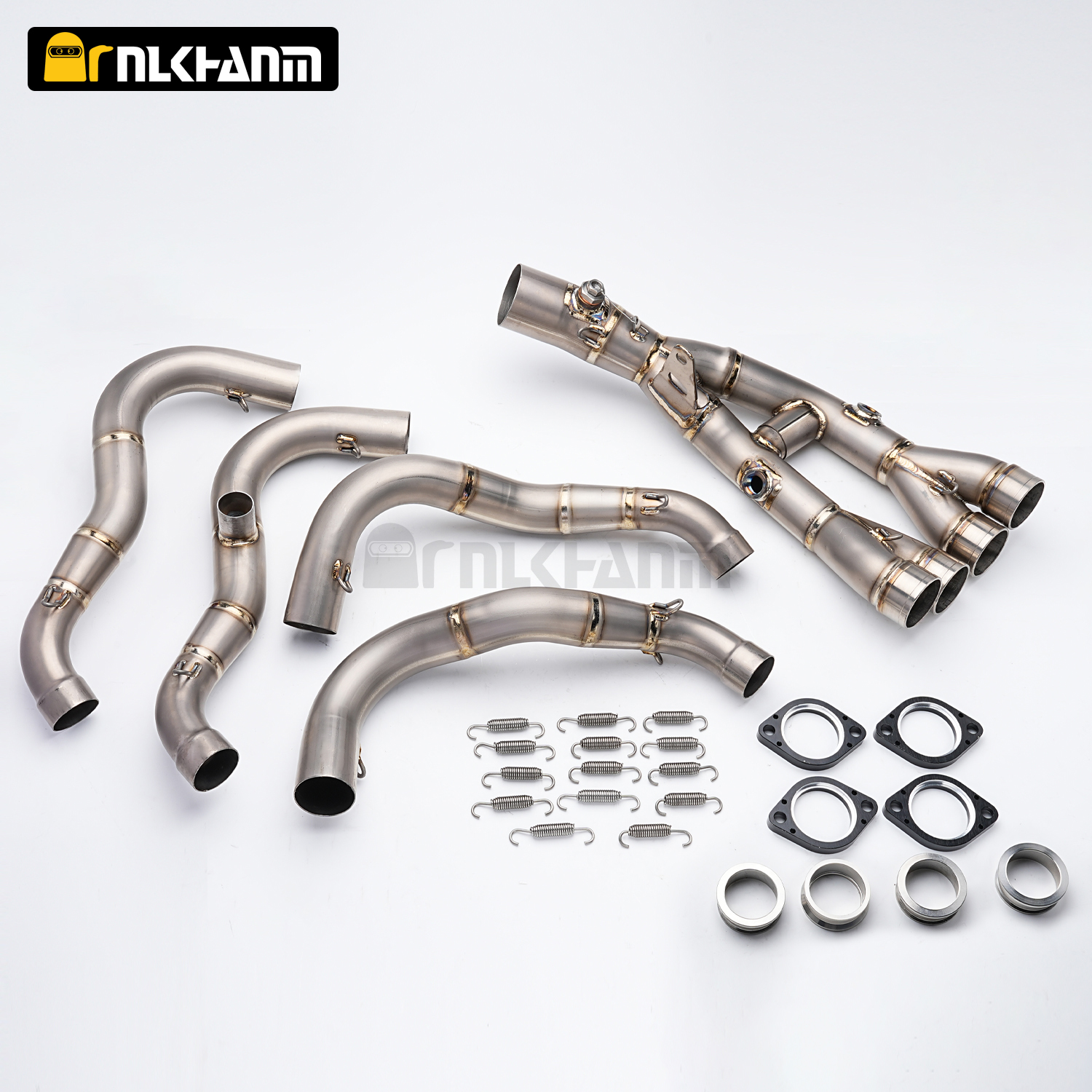
How does the exhaust pipe connect to the system?
The connection point is just as vital as the muffler itself. This is where the concept of a flexible exhaust muffler pipe becomes important, particularly in custom builds or specific universal applications.
A flexible exhaust muffler pipe is a section of piping designed to absorb vibration. Motorcycle engines vibrate significantly, and if the entire exhaust system were purely rigid, these vibrations could crack the manifold or the muffler mounting points. A flexible section (often a braided steel mesh bellow) acts as a decoupler, allowing the engine to move slightly without stressing the exhaust system.
Furthermore, for custom projects where you are mating a universal Jilang muffler to a bike with unique geometry, a flexible pipe section can be a lifesaver, bridging the gap between headers and the canister where a rigid pipe wouldn't fit.
Does a muffler affect horsepower?
Yes, but it is a balancing act. This brings us to the concept of "backpressure."
Many riders believe that "more flow equals more power." While true for high-RPM racing, street engines need a certain amount of exhaust gas velocity to work efficiently.
Too much restriction (Stock): The engine has to work hard to push the gas out, robbing it of top-end power.
Too little restriction (Open pipe): The exhaust gas leaves too fast, and the "scavenging" effect (where exiting gas helps pull fresh air/fuel into the combustion chamber) is lost. This often kills low-end torque, making the bike feel sluggish at traffic lights.
Performance mufflers, such as the titanium or carbon fiber options from Jilang, are engineered to hit the sweet spot: they reduce the restriction compared to stock mufflers to gain peak horsepower, but maintain enough velocity to keep the throttle response crisp.
Frequently Asked Questions regarding exhaust systems
What is a DB Killer?
You may notice some Jilang exhaust systems come with a removable "DB Killer." This is a small insert that fits into the outlet of an absorptive muffler. It restricts the opening slightly and adds a small baffling effect. This allows riders to uncap the exhaust for track days (for maximum flow and sound) and put the insert back in for street riding to stay on good terms with the neighbors.
Can I install a universal muffler on any bike?
"Universal" means the muffler isn't shaped for one specific frame, but it doesn't mean it fits everything automatically. You need to match the inlet diameter (e.g., 51mm or 60mm) to your mid-pipe. You may also need a custom link pipe or a flexible exhaust muffler pipe adapter to make the connection seamless.
Why do aftermarket mufflers require re-tuning?
Because performance mufflers increase air flow, they can make the engine run "lean" (too much air, not enough fuel). On modern fuel-injected bikes, the computer can sometimes adjust, but often you will need an ECU re-flash to get the most out of the new exhaust and prevent engine damage.
Choosing the right system for your ride
The muffler is more than a metal tube; it is a sophisticated device that balances acoustics, physics, and fluid dynamics. Whether you are looking for the lightweight performance of carbon fiber, the race-ready nature of titanium, or the durability of steel, understanding how these components work ensures you get the best performance for your machine.
If you are ready to upgrade your bike's sound and performance, exploring the universal and model-specific options at Jilang Motorcycle Exhaust Systems is a great place to start. From specialized setups for Ducati and Yamaha to universal slip-ons, the right muffler can completely transform your riding experience.
flexible exhaust muffler pipe
exhaust silencer muffler
motorcycle exhaust muffler silencer

 English
 العربية
 Français
 Русский
 Español
 Português
 Deutsch
 italiano
 日本語
日本語 한국어
한국어 Nederlands
 Tiếng Việt
 ไทย
ไทย Polski
 Türkçe
 አማርኛ
አማርኛ ພາສາລາວ
 ភាសាខ្មែរ
 Bahasa Melayu
 ဗမာစာ
ဗမာစာ தமிழ்
தமிழ் Filipino
 Bahasa Indonesia
 magyar
 Română
 Čeština
 Монгол
 қазақ
қазақ Српски
 हिन्दी
 Slovenčina
 Norsk
Norsk Svenska
 українська
 Ελληνικά
 Suomi
Suomi עברית
עברית Latine
 Dansk
Dansk বাংলা
বাংলা Hrvatski
 Afrikaans
 Gaeilge
 Māori
Māori नेपाली
 Oʻzbekcha
 Беларуская мова
 ʻŌlelo Hawaiʻi
 íslenska
 Kinyarwanda


