You have likely heard the terms thrown around in the garage or at the track. Someone talks about their new "pipes," another mentions upgrading their "silencer," and the mechanic recommends a new "muffler." For many motorcycle enthusiasts and car owners, these words seem interchangeable. However, while they all serve the same master—the exhaust system—they play very different roles.
Understanding the anatomy of your exhaust system is not just about sounding like a pro during a conversation. It is vital for making the right upgrades to your vehicle. Whether you want to increase horsepower, reduce weight, or simply change the acoustic profile of your engine, you need to know which part does what.
This guide breaks down the specific functions of the exhaust pipe, muffler, and silencer. We will explore how they work together, how they differ, and which components you should focus on upgrading to get the best performance out of your machine.
The Anatomy of an Exhaust System
To understand the difference between these parts, you have to look at the exhaust system as a chain. It starts at the engine and ends at the tailpipe. Each link in this chain has a specific job to do regarding gas flow, heat management, and sound control.
The Exhaust Pipe (The Plumbing)
The exhaust pipe is the vessel. Its primary job is transport. When your engine burns fuel, it creates high-pressure, hot gases. These gases need to exit the combustion chamber quickly to make room for fresh air and fuel. The exhaust pipe connects to the engine (via the manifold or headers) and funnels these gases away from the vehicle.
In performance terms, the diameter and bends of the pipe matter immensely. If the pipe is too narrow, it creates backpressure, choking the engine. If it is too wide, the gases might lose velocity. The pipe itself does not do much to dampen sound; in fact, a straight pipe without other components is incredibly loud.
The Muffler (The Sound Engineer)
The muffler is exactly what it sounds like—it muffles the noise. It is a large chamber, usually cylindrical or oval, attached to the exhaust pipe. Inside, it contains a series of tubes, baffles, and chambers designed to reflect sound waves against each other, canceling them out.
Some mufflers use sound-absorbing materials like fiberglass or steel wool to absorb high-frequency vibrations. The goal is to reduce the volume of the engine without restricting the flow of gas too much.
The Silencer (The Fine Tuner)
This is where terminology gets tricky. In many parts of the world (like the UK), "silencer" is simply the word for "muffler." They are the same thing. However, in the context of aftermarket motorcycle parts and high-performance modification, a "silencer" often refers to a specific component—sometimes called a "DB killer" or a removable baffle—inserted into the tip of the muffler.
For the purpose of this guide, we will treat the silencer as the final stage of sound reduction, often responsible for refining the tone and bringing the decibel level down to street-legal standards.
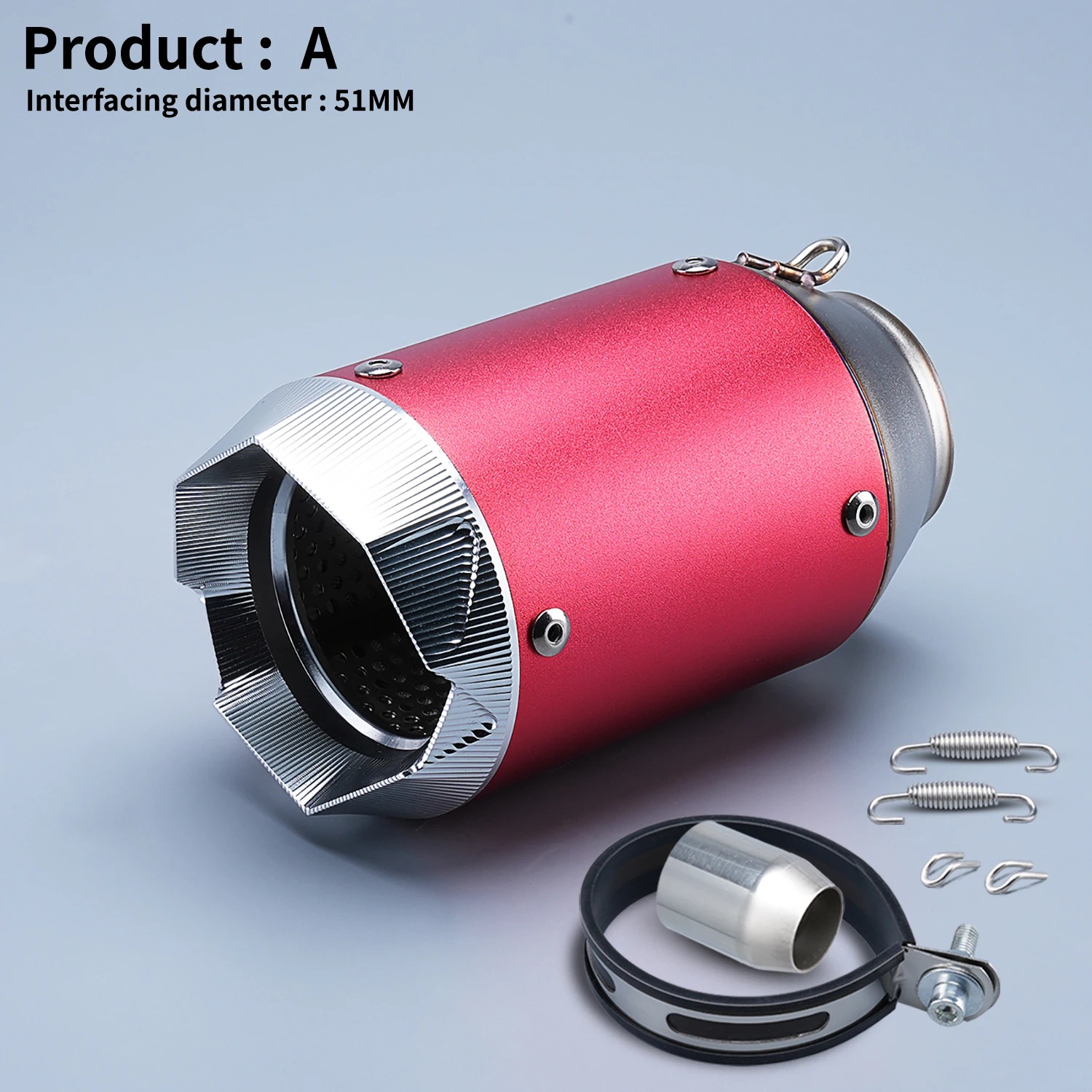
Comparison: Component Functions
To make this easier to visualize, here is a breakdown of how these three components compare regarding their primary function and impact on your vehicle.
Feature | Exhaust Pipe | Muffler | Silencer (DB Killer) |
Primary Function | Transports gases away from the engine | Reduces overall engine volume | Fine-tunes sound and reduces decibels |
Impact on Power | High (affects flow and backpressure) | Moderate (can restrict flow) | Low to Moderate (minor restriction) |
Material | Stainless Steel, Titanium | Steel, Carbon Fiber, Titanium | Stainless Steel, Aluminum |
Location | Connected to engine manifold | Mid-section or rear of the system | Inside the muffler tip |
Removability | Permanent fixture | Permanent fixture | Often removable |
How Materials Impact Performance
When you are shopping for an exhaust pipe muffler silencer combination, the material is just as important as the design. The construction material dictates how much heat the system can handle, how much it weighs, and how long it will last.
Stainless Steel
This is the industry standard. It is durable, resistant to rust, and relatively affordable. It is heavier than other options, but for a daily rider, it is a solid choice.
Titanium
Titanium is the racer’s choice. It offers the strength of steel but at nearly half the weight. When heated, titanium pipes often turn a distinct blue or purple, which many enthusiasts love. The downside is the cost; it is significantly more expensive than steel.
Carbon Fiber
Carbon fiber is the premium choice for mufflers and silencers. It is incredibly lightweight and stays much cooler than metal. This is a huge benefit for motorcyclists, as it reduces the risk of accidental burns from touching a hot exhaust. Furthermore, carbon fiber provides a unique, deep, and resonant sound that metal mufflers often cannot replicate.
If you are looking to upgrade your bike's aesthetic and performance, checking out high-quality carbon fiber exhaust mufflers is a great place to start. They offer the perfect balance of weight reduction and acoustic tuning.
Frequently Asked Questions About Exhaust Noise
Many vehicle owners are confused about how to manage airflow and noise. Below, we address common questions regarding exhaust muffler silencers.
Q: What is the difference between an exhaust muffler silencer and a standard muffler?
A: While the terms effectively describe similar outcomes—quieting an exhaust—the application differs based on the industry.
Standard Muffler:
This is designed for internal combustion engines (cars, trucks, motorcycles). It handles hot, expanding gases produced by explosions in the engine cylinders. It must withstand extreme heat and vibration.
Exhaust Muffler Silencer:
The term exhaust muffler silencer (or exhaust muffler silencers in plural) typically refers to components used in pneumatic systems. These are used on equipment powered by compressed air, such as air valves, cylinders, and pneumatic tools.
When compressed air is exhausted from a port, it expands rapidly, creating a loud, sharp noise that can be dangerous to hearing in an industrial setting. An exhaust muffler silencer is screwed into the exhaust port to diffuse this air release, bringing the noise down to a safe level. They are usually made of sintered bronze or porous plastic.
The crossover:
In the context of motorcycles, if you see a product labeled as a "silencer" for an " exhaust," double-check the specifications.
Choosing the Right Upgrade for You
Deciding which part of the system to upgrade depends entirely on your goals.
If you want more power:
Look at a full system upgrade, including the exhaust pipes (headers). You want to smooth out the bends and increase the diameter slightly to improve gas flow. This usually requires retuning the engine's fuel map to ensure it runs correctly with the increased airflow.
If you want a better sound:
Focus on the muffler (or slip-on exhaust). This is the most popular modification for motorcycles. A slip-on replaces the stock muffler but keeps the original exhaust pipes. It changes the exhaust note—making it deeper or more aggressive—without requiring significant mechanical work.
If you want to be a good neighbor:
If your aftermarket exhaust is waking up the whole block, you need a silencer insert. These small devices slide into the muffler tip and disrupt the sound waves just enough to lower the volume without completely killing the "growl" of the bike.
Elevate Your Riding Experience
Your exhaust system is the voice of your vehicle. It communicates the power of the engine to the outside world. Whether you are distinguishing between an exhaust pipe muffler silencer setup or just looking for a new look, knowledge is your best tool.
Don't settle for stock parts that are heavy and restrictive. By upgrading to lighter materials like carbon fiber and understanding the mechanics of sound reduction, you can improve your bike's handling, throttle response, and audio profile.
Ready to transform your ride? Ensure you research the specific fitment for your bike model and choose a manufacturer that values build quality and performance materials. A better exhaust doesn't just sound better; it feels better.
exhaust pipe muffler silencer
exhaust muffler silencer
exhaust muffler silencers

 English
 العربية
 Français
 Русский
 Español
 Português
 Deutsch
 italiano
 日本語
日本語 한국어
한국어 Nederlands
 Tiếng Việt
 ไทย
ไทย Polski
 Türkçe
 አማርኛ
አማርኛ ພາສາລາວ
 ភាសាខ្មែរ
 Bahasa Melayu
 ဗမာစာ
ဗမာစာ தமிழ்
தமிழ் Filipino
 Bahasa Indonesia
 magyar
 Română
 Čeština
 Монгол
 қазақ
қазақ Српски
 हिन्दी
 Slovenčina
 Norsk
Norsk Svenska
 українська
 Ελληνικά
 Suomi
Suomi עברית
עברית Latine
 Dansk
Dansk বাংলা
বাংলা Hrvatski
 Afrikaans
 Gaeilge
 Māori
Māori नेपाली
 Oʻzbekcha
 Беларуская мова
 ʻŌlelo Hawaiʻi
 íslenska
 Kinyarwanda


