You are here:Home / News / news / Motorcycle Full System Exhaust: Unleashing Performance, Sound, And Style
Motorcycle Full System Exhaust: Unleashing Performance, Sound, And Style
Views: 0 Author: Site Editor Publish Time: 2025-11-25 Origin: Site
The heartbeat of a motorcycle is its engine, and the voice of that heartbeat is its exhaust system. While stock exhausts are designed with a focus on cost, noise regulations, and broad usability, the aftermarket offers a transformative upgrade: the full system exhaust. This is not merely a cosmetic change; it is a comprehensive re-engineering of one of the most critical components of a motorcycle's performance ecosystem. Replacing the entire exhaust from the engine head to the tailpipe, a full system is the key to unlocking hidden power, shedding significant weight, and defining a motorcycle's auditory character.
The Anatomy of a Full System: Replacing the Entire Pathway
To understand the value of a full system, one must first understand what it replaces. A stock motorcycle exhaust is a complex assembly of compromises, consisting of:
Exhaust Manifolds/Headers: The pipes that connect directly to the engine's cylinder head, collecting exhaust gases.
Catalytic Converter (Cat): An integral part of modern stock systems, the cat uses precious metals to convert harmful pollutants (CO, NOx, HC) into less harmful gases. It is highly effective for emissions but creates significant exhaust backpressure.
Mid-Pipe and Resonator: Connects the headers to the muffler; may contain a resonator to help cancel out specific sound frequencies.
Muffler/Silencer: The final chamber designed to dampen sound waves to meet strict legal dB limits.
A full system exhaust replaces every single one of these components with a high-performance alternative, typically constructed from lightweight materials like T304 or T409 stainless steel, titanium, or in some cases, carbon fiber sleeves for the muffler.
The Compelling Triad of Benefits: Why Riders Upgrade
The decision to install a full system is driven by the pursuit of three primary enhancements: performance, aesthetics, and sound.
1. Significant Performance Gains: The most technical reason for the upgrade is the liberation of power. Stock systems are choked by the catalytic converter and restrictive mufflers, creating backpressure that forces the engine to work harder to expel exhaust gases. A full system addresses this by:
Reducing Backpressure: By eliminating the cat and using less restrictive, smoother-flowing mufflers, the engine can "breathe" out more easily. This allows for a more complete evacuation of exhaust gases, enabling the engine to draw in a fresh air/fuel mixture more efficiently.
Optimized Exhaust Scavenging: High-performance headers are often designed with precise diameters and lengths to utilize pressure waves. A well-tuned header can create a negative pressure pulse that helps pull exhaust gases out of the cylinder and even draw in the fresh intake charge, improving volumetric efficiency.
Weight Reduction: This is a dramatic and often overlooked benefit. A heavy stock exhaust system, especially on a sportbike, is located high and at the rear, negatively affecting handling. A full system in titanium or stainless steel can shed 10-20 pounds (4.5-9 kg) or more, resulting in a more agile, responsive motorcycle with improved acceleration and braking.
2. Auditory Character and Presence: A motorcycle's sound is its signature. Stock mufflers mute this signature into a socially acceptable whisper. A full system unleashes the true, unfiltered voice of the engine—whether it's the deep, throaty rumble of a V-twin, the high-pitched scream of an inline-four, or the aggressive bark of a parallel-twin. Riders seek this not just for volume, but for a richer, more complex, and emotionally engaging auditory experience.
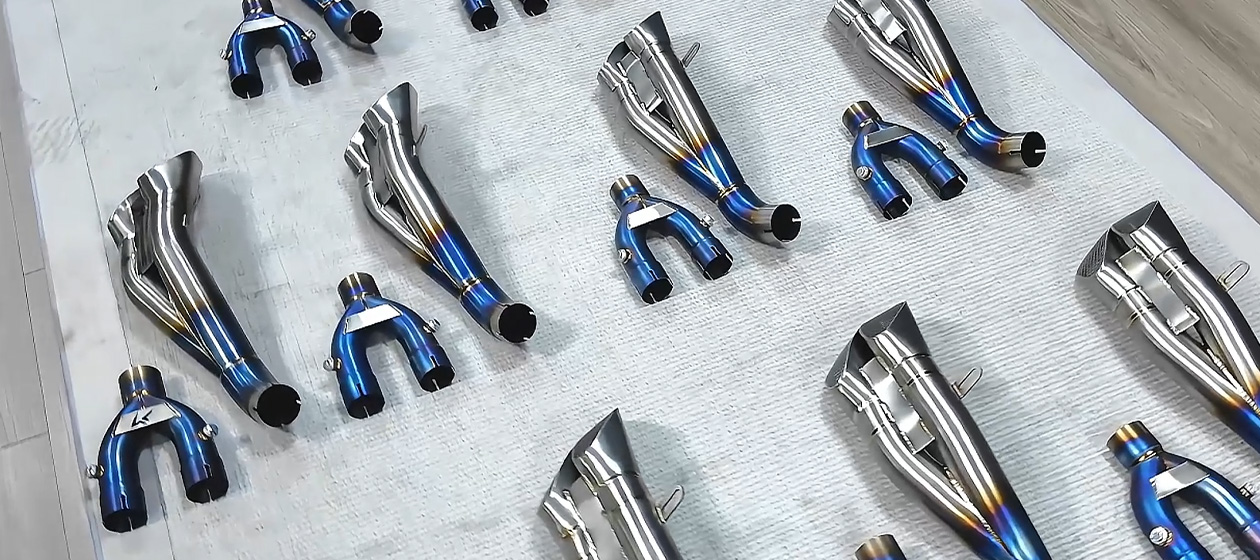
3. Aesthetic Transformation and Customization: Full systems radically alter the motorcycle's appearance. They often feature sleek, minimalist designs that showcase the rear wheel and the bike's mechanical components. The choice of materials—from the brushed sheen of stainless steel and the blue-hued elegance of titanium to the race-ready look of carbon fiber—allows riders to personalize their machine to a high degree.
The Critical Consideration: Fueling and Engine Management
Installing a full system is not a simple "bolt-on and go" modification. By dramatically changing the flow of exhaust gases, the system alters the engine's air-fuel ratio (AFR). The Engine Control Unit (ECU), programmed for the stock exhaust, will now be feeding the engine based on incorrect parameters, typically resulting in a mixture that is too lean (not enough fuel). A lean condition can cause poor throttle response, engine hesitation, and, most dangerously, a significant increase in engine temperature, potentially leading to premature wear or severe damage.
The solutions are non-negotiable:
ECU Remapping/Flashing: The most common and effective method. A specialist connects a device to the motorcycle's diagnostic port and uploads a new fuel and ignition map tailored to the new exhaust and, ideally, a high-flow air filter.
Power Commander / Fuel Controller: A piggyback electronic device that intercepts and modifies the signals from the ECU to the fuel injectors, allowing for precise adjustment of the fuel map.
Autotuners: Devices that work in conjunction with a fuel controller, using a wideband O2 sensor to constantly monitor and adjust the AFR in real-time for optimal performance.
A Comparative Guide to Full System Configurations
The market offers a variety of full system types, each with distinct performance characteristics, noise levels, and legal standings. The table below provides a clear comparison.
Designed to meet specific country's noise and emissions regulations. Often includes a catalytic converter and a removable baffle (dB-killer).
Performance: Good low-to-mid range power gains. A safe, engineered compromise. Sound: Deeper and fuller than stock, but restrained. Polite for street use.
Street Legal (when marked). The safest choice for riders who want an upgrade without legal issues or excessive noise.
Race System (No Cat, Straight-Through)
The pure performance option. No catalytic converter; typically a straight-through design for maximum flow. dB-killer is often removable.
Performance: Maximum peak horsepower gains, usually in the higher RPM range. Significant weight savings. Sound: Very loud and aggressive. The authentic "race bike" sound.
Not Street Legal. For closed-course competition only. Use on public roads can result in fines. ECU tuning is absolutely mandatory.
High-Mount / Underslung / Shorty
Variations based on the routing and placement of the muffler. High-mount tucks the can under the tail for a race-replica look; underslung places it beneath the engine.
Performance: Similar to other race systems. Can affect center of gravity (underslung) or offer increased cornering clearance (high-mount). Sound: Varies by design, but often louder due to shorter muffler body on "shorty" styles.
Typically Not Street Legal. Primarily for aesthetics and track use. Cornering clearance can be greatly improved with high-mount systems.
Material Matters: Choosing the Right Substance
The choice of material impacts weight, cost, appearance, and durability.
Stainless Steel (T304): The most popular all-around choice. Offers an excellent balance of corrosion resistance, durability, and cost. It is significantly lighter than stock and can develop a golden patina with heat.
Titanium: The ultimate lightweight material. It is about 40% lighter than stainless steel and has a distinctive, mellow blue/purple discoloration when heated. It is more expensive and less durable against impacts than steel, but offers the highest performance weight savings.
Carbon Fiber: Used primarily for muffler sleeves. It is extremely light and has a high-tech, premium appearance. It is susceptible to damage from impacts and heat, requiring careful handling.
Conclusion: An Investment in the Riding Experience
A full system exhaust is one of the most impactful modifications a motorcyclist can make. It is a holistic upgrade that transforms the machine's performance, sound, and soul. The combination of tangible power gains, dramatic weight reduction, and a thrilling auditory profile creates a more visceral and connected riding experience.
However, this upgrade comes with responsibility. The imperative for proper ECU tuning cannot be overstated; it is the crucial step that protects the engine investment and ensures the system performs as intended. Furthermore, riders must be mindful of local noise regulations and choose a system that aligns with their riding environment—whether that's a compliant street system or an all-out race unit for the track. When selected and installed correctly, a full system exhaust does more than just improve a motorcycle; it redefines it, turning a standard production bike into a personalized expression of performance and passion.

 English
 العربية
 Français
 Русский
 Español
 Português
 Deutsch
 italiano
 日本語
日本語 한국어
한국어 Nederlands
 Tiếng Việt
 ไทย
ไทย Polski
 Türkçe
 አማርኛ
አማርኛ ພາສາລາວ
 ភាសាខ្មែរ
 Bahasa Melayu
 ဗမာစာ
ဗမာစာ தமிழ்
தமிழ் Filipino
 Bahasa Indonesia
 magyar
 Română
 Čeština
 Монгол
 қазақ
қазақ Српски
 हिन्दी
 Slovenčina
 Norsk
Norsk Svenska
 українська
 Ελληνικά
 Suomi
Suomi עברית
עברית Latine
 Dansk
Dansk বাংলা
বাংলা Hrvatski
 Afrikaans
 Gaeilge
 Māori
Māori नेपाली
 Oʻzbekcha
 Беларуская мова
 ʻŌlelo Hawaiʻi
 íslenska
 Kinyarwanda