If you've ever heard the deep rumble of a motorcycle, you've experienced the work of its exhaust system. While many riders appreciate the sound, the exhaust does much more than just make noise. It is a critical component that directly impacts your motorcycle's performance, efficiency, and even its appearance.
Understanding how an exhaust system functions can help you make better decisions about maintenance and upgrades. This guide will explain the essential roles of a motorcycle exhaust, from managing engine byproducts to boosting horsepower. We will also explore different types of systems, including popular upgrades like carbon fiber exhaust systems, to help you determine what's best for your ride.
The Core Functions of a Motorcycle Exhaust
A motorcycle's engine is a powerful machine that creates energy through combustion. This process also produces extremely hot, loud, and harmful gases. The primary job of the exhaust system is to manage these byproducts safely and efficiently. It accomplishes this through four key functions.
1. Directing Harmful Gases Away
The most fundamental role of an exhaust system is to channel toxic fumes away from the rider and engine. During combustion, the engine produces gases like carbon monoxide, hydrocarbons, and nitrogen oxides. The exhaust pipes guide these dangerous gases from the engine's cylinders to the rear of the motorcycle, releasing them into the atmosphere where they can dissipate safely. Without a properly functioning exhaust, these fumes could pose a serious health risk to the rider and damage sensitive engine components.
2. Reducing Engine Noise
An engine's combustion process is incredibly loud. The rapid ignition of the air-fuel mixture creates a series of powerful explosions, generating sound waves that would be deafening without a muffler. The muffler, also known as a silencer, is a key part of the exhaust system designed to reduce this noise.
Inside the muffler, a series of chambers and perforated tubes forces the sound waves to bounce around and cancel each other out. This process, called destructive interference, significantly dampens the noise before it exits the tailpipe. While aftermarket exhausts can alter the sound to be louder or deeper, the fundamental purpose of the muffler is to keep the engine's roar at a legally acceptable and more comfortable level.
3. Improving Engine Performance
A well-designed exhaust system can significantly enhance a motorcycle's performance. It achieves this by creating "back pressure," which is a controlled level of resistance in the exhaust flow. This might sound counterintuitive—wouldn't you want gases to escape as freely as possible?
In a four-stroke engine, a small amount of unburnt fuel can escape with the exhaust gases during the valve overlap period (when both intake and exhaust valves are momentarily open). Proper back pressure helps prevent this by creating a "scavenging" effect. As one pulse of exhaust gas travels down the pipe, it creates a low-pressure area behind it, which helps pull the next wave of exhaust gas out of the cylinder. This process also helps draw a fresh air-fuel mixture into the cylinder, improving combustion efficiency and ultimately boosting horsepower and torque.
4. Enhancing Fuel Efficiency
By optimizing the engine's breathing process, the exhaust system also contributes to better fuel economy. The scavenging effect ensures that the maximum amount of spent gas is removed from the cylinders and a full charge of fresh air-fuel mixture is drawn in. This leads to more complete and efficient combustion. When your engine is running efficiently, it can produce more power from the same amount of fuel, meaning you can travel further on each tank.
The Anatomy of an Exhaust System
To understand how it all works together, it helps to know the main components of a typical motorcycle exhaust system.
★Exhaust Headers (or Header Pipes): These are the pipes connected directly to the engine's cylinders. They collect the hot gases as they exit the engine. The design, length, and diameter of the headers are crucial for performance.
★Collector: In multi-cylinder engines, the header pipes merge into a single pipe called the collector. The shape and design of the collector help manage the flow of exhaust pulses from different cylinders.
★Catalytic Converter: Modern motorcycles are equipped with a catalytic converter to meet emissions standards. This device contains a catalyst (usually made of precious metals like platinum and rhodium) that converts harmful gases like carbon monoxide and nitrogen oxides into less harmful substances like carbon dioxide, nitrogen, and water.
★Muffler (Silencer): As discussed, the muffler's job is to reduce engine noise. It's typically the largest and last component in the exhaust system.
★Tailpipe: This is the final section of the system where the exhaust gases are released into the air.
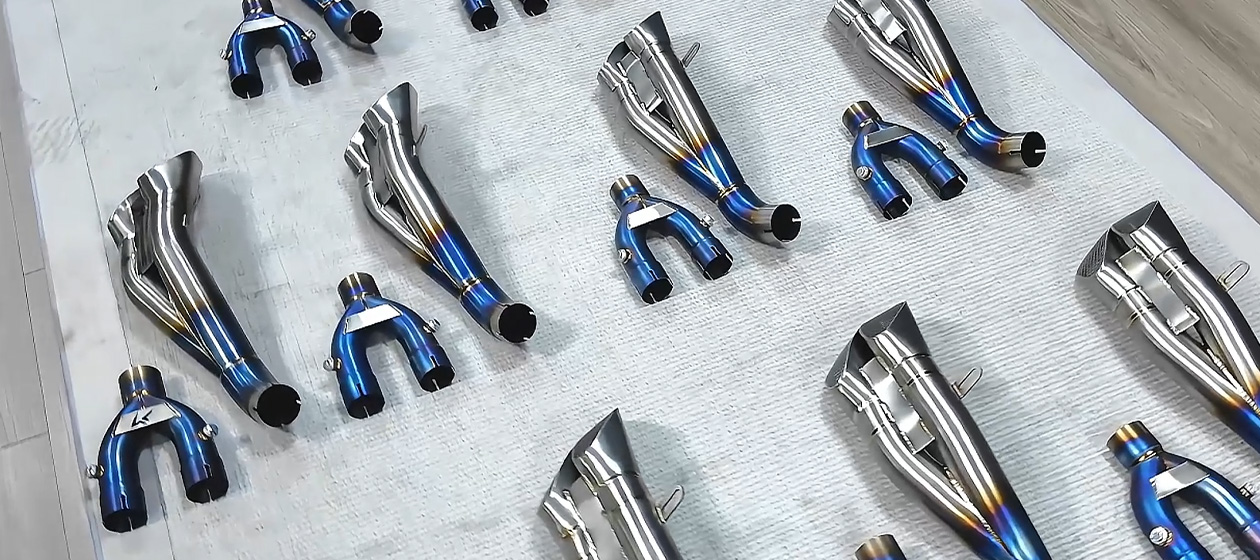
Upgrading Your Exhaust: Aftermarket Options
Many riders choose to replace the stock exhaust system with an aftermarket one. There are several reasons for this, including improved performance, a more desirable sound, weight reduction, and enhanced aesthetics.
Types of Aftermarket Systems
★Slip-On Exhausts: A slip-on is an aftermarket muffler that replaces the stock one. It's a relatively easy and affordable upgrade that can change the bike's sound and appearance while offering a modest performance boost.
★Full Exhaust Systems: A full system replaces everything from the exhaust headers to the tailpipe. This is a more complex and expensive upgrade but offers the most significant gains in performance and the biggest reduction in weight. A full system allows for a complete redesign of the exhaust flow, optimized for power and efficiency.
Materials Used in Aftermarket Exhausts
Aftermarket exhausts are often made from materials that are lighter and more durable than the steel used in stock systems.
★Stainless Steel: A popular choice that offers good durability and corrosion resistance at a reasonable price point.
★Titanium: A premium option that is significantly lighter than steel and very strong. It's a favorite in racing due to its excellent weight-to-strength ratio.
★Carbon Fiber Exhaust Systems: Carbon fiber exhaust systems are highly sought after for their extremely low weight and unique, high-tech look. Often, the muffler canister is made of carbon fiber, while the pipes are made of stainless steel or titanium. This combination provides substantial weight savings, which can improve the motorcycle's handling and agility. Carbon fiber also dissipates heat well, though it can be more susceptible to damage from impact compared to metal.
Is an Exhaust Upgrade Right for You?
Before investing in a new exhaust system, it's important to consider your goals. Are you looking for a louder, more aggressive sound? Do you want to shave off a few pounds for better track performance? Or are you simply looking for a new look for your bike?
Keep in mind that changing your exhaust system, especially with a full system, may require re-tuning your engine's fuel management system (re-jetting a carburetor or re-mapping the ECU) to get the full performance benefits and ensure the engine runs properly. It's also essential to check local noise and emissions laws, as some aftermarket exhausts may not be street-legal.
The Final Word on Exhausts
The exhaust on your motorcycle is far more than just a noisy pipe. It's a finely-tuned system engineered to ensure safety, control sound, and maximize engine performance. Whether you're happy with your stock setup or considering an upgrade to a high-performance carbon fiber exhaust system, understanding what your exhaust does is the first step toward making informed decisions for your ride.
If you're thinking about an upgrade, consult with a trusted mechanic to discuss the best options for your specific motorcycle model and riding style.
carbon fiber exhaust sysems
motorcycle exhaust manufacturer
titanium exhaust systems

 English
 العربية
 Français
 Русский
 Español
 Português
 Deutsch
 italiano
 日本語
日本語 한국어
한국어 Nederlands
 Tiếng Việt
 ไทย
ไทย Polski
 Türkçe
 አማርኛ
አማርኛ ພາສາລາວ
 ភាសាខ្មែរ
 Bahasa Melayu
 ဗမာစာ
ဗမာစာ தமிழ்
தமிழ் Filipino
 Bahasa Indonesia
 magyar
 Română
 Čeština
 Монгол
 қазақ
қазақ Српски
 हिन्दी
 Slovenčina
 Norsk
Norsk Svenska
 українська
 Ελληνικά
 Suomi
Suomi עברית
עברית Latine
 Dansk
Dansk বাংলা
বাংলা Hrvatski
 Afrikaans
 Gaeilge
 Māori
Māori नेपाली
 Oʻzbekcha
 Беларуская мова
 ʻŌlelo Hawaiʻi
 íslenska
 Kinyarwanda


