You are here:Home / News / news / Exhaust System Materials: Balancing Heat, Corrosion, And Cost
Exhaust System Materials: Balancing Heat, Corrosion, And Cost
Views: 0 Author: Site Editor Publish Time: 2025-11-26 Origin: Site
The automotive exhaust system performs a critical trio of functions: it routes toxic gases away from the passenger cabin, reduces engine noise, and, in modern cars, cleans the exhaust stream using catalytic converters. To withstand a brutal operating environment of extreme heat, corrosive chemicals, and physical vibration, exhaust systems are constructed from a range of specialized materials. The choice of material is a constant balance between performance, durability, and cost.
The Hostile Environment of an Exhaust System
An exhaust material must contend with several adversaries:
Extreme Heat: Exhaust gases can exit the engine cylinder head at over 1,600°F (870°C). While it cools as it travels, the manifold and downpipe areas remain exceptionally hot.
Corrosive Attack: The exhaust stream contains moisture (a byproduct of combustion), acidic compounds (like sulfuric and nitrous acid), and salty road spray in winter. This creates a highly corrosive condensate, especially during short trips when the system never fully heats up to evaporate the moisture.
Thermal Cycling: The repeated heating and cooling cause expansion and contraction, leading to metal fatigue and stress cracks over time.
Common Exhaust Materials and Their Applications
The material used often varies along the length of the exhaust system, as temperature and requirements change.
Mild Steel (Aluminized or Galvanized): This is the most common material for OEM (Original Equipment Manufacturer) exhaust systems, particularly for mid-pipes and mufflers. Mild steel itself would rust quickly, so it is coated with an aluminum-silicon alloy ("aluminized steel") or zinc ("galvanized steel"). This coating provides a sacrificial layer that significantly improves corrosion resistance at a low cost. However, once the coating is scratched or compromised, the underlying steel is vulnerable.
Stainless Steel: Stainless steel is an alloy known for its excellent corrosion resistance, primarily due to its chromium content (typically 10.5% or more). It is the preferred material for aftermarket performance and durability upgrades. There are two main grades:
409 Stainless Steel: The most common stainless steel for OEM performance systems and many aftermarket replacements. It offers good resistance to heat and corrosion at a reasonable price, though it may still develop a surface patina or light rust over time.
304 Stainless Steel: A higher-grade austenitic stainless steel containing nickel. It offers superior corrosion resistance and is often used in high-end aftermarket cat-back systems. It is known for its ability to maintain a bright, shiny "polished" appearance.
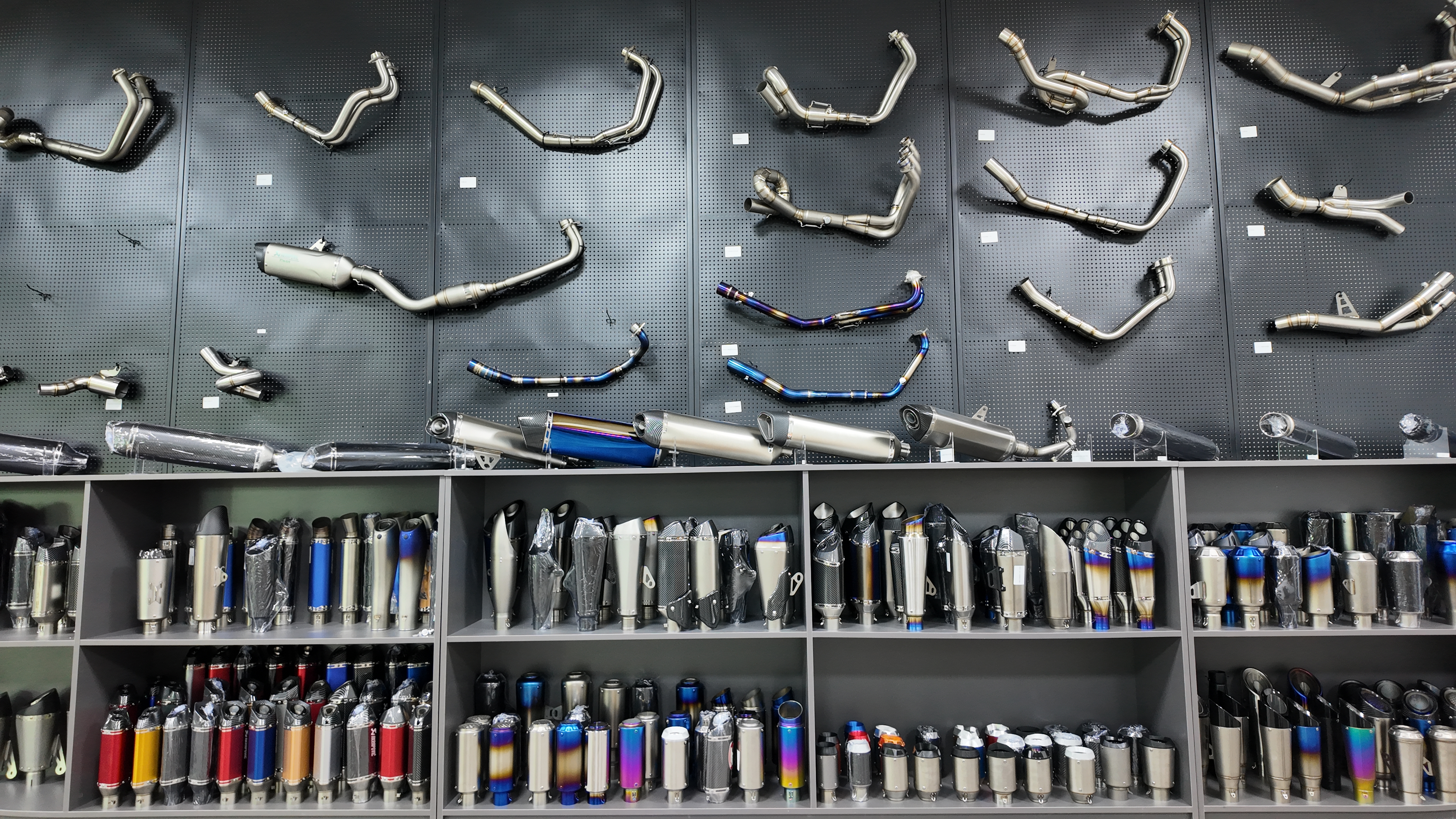
Titanium: Used almost exclusively in high-performance motorsports and on top-tier supercars, titanium is the ultimate exhaust material in many ways. It is incredibly strong and has a melting point higher than steel, but its key advantage is its exceptionally low weight—about half that of stainless steel. While it offers excellent corrosion resistance, its extremely high cost limits its use to specialized applications.
The following table summarizes the key aspects of these exhaust materials for a quick overview.
Summary Table: Exhaust System Materials at a Glance
Material
Key Characteristics
Primary Applications
Pros
Cons
Aluminized Mild Steel
Steel sheet coated with an aluminum-silicon alloy.
OEM exhaust systems (mid-pipes, mufflers, resonators).
Low cost, good balance of durability and price.
Coating can be compromised; limited lifespan in harsh conditions.
Extremely light and strong, excellent heat and corrosion resistance.
Very high cost, difficult to weld and fabricate.
Conclusion
The choice of exhaust material is a direct reflection of the application's priorities. For mass-produced vehicles, cost-effective aluminized steel strikes a necessary balance. For drivers seeking a blend of improved sound, performance, and longevity, stainless steel (409 or 304) is the ideal upgrade. For the pinnacle of performance where weight savings is paramount and cost is no object, titanium reigns supreme. Understanding these materials helps in making an informed decision, whether replacing a worn-out section or upgrading for better performance and sound.

 English
 العربية
 Français
 Русский
 Español
 Português
 Deutsch
 italiano
 日本語
日本語 한국어
한국어 Nederlands
 Tiếng Việt
 ไทย
ไทย Polski
 Türkçe
 አማርኛ
አማርኛ ພາສາລາວ
 ភាសាខ្មែរ
 Bahasa Melayu
 ဗမာစာ
ဗမာစာ தமிழ்
தமிழ் Filipino
 Bahasa Indonesia
 magyar
 Română
 Čeština
 Монгол
 қазақ
қазақ Српски
 हिन्दी
 Slovenčina
 Norsk
Norsk Svenska
 українська
 Ελληνικά
 Suomi
Suomi עברית
עברית Latine
 Dansk
Dansk বাংলা
বাংলা Hrvatski
 Afrikaans
 Gaeilge
 Māori
Māori नेपाली
 Oʻzbekcha
 Беларуская мова
 ʻŌlelo Hawaiʻi
 íslenska
 Kinyarwanda