For any motorcycle enthusiast, the exhaust system is more than just a pipe that directs fumes away from the engine. It is a critical component that defines the bike's character, sound profile, weight distribution, and overall performance. When upgrading a motorcycle, choosing the right manufacturer is paramount, but understanding the materials they use is equally important.
Jilang Motorcycle Exhaust Systems has established itself as a significant player in the aftermarket parts industry. With a professional team and strict quality control standards, they produce components for high-end brands ranging from Ducati to KTM. But what exactly goes into the manufacturing of these parts?
This article explores the specific materials utilized by Jilang, analyzing why they are chosen and how they impact your riding experience.
Why is material selection critical for motorcycle exhausts?
Before identifying specific materials, it is vital to understand why manufacturers cannot simply use any metal available. The environment inside and around a motorcycle exhaust is incredibly hostile. The system must withstand extreme heat cycles, passing from ambient temperature to hundreds of degrees in seconds. It must also resist corrosion from exhaust gases (which contain moisture and acids) and external elements like rain and road salt.
Furthermore, weight is a massive factor in motorcycle performance. A heavy exhaust system located low and to the side or under the seat can negatively affect the bike's center of gravity and handling. Therefore, Jilang focuses on materials that offer the best balance of heat resistance, durability, and weight reduction.
What is the primary metal used in Jilang exhaust systems?
The backbone of the Jilang product line is high-grade stainless steel. While many stock exhausts are made from heavy, mild steel that is prone to rusting, Jilang utilizes premium stainless steel for its durability and cost-effectiveness.
As a dedicated stainless steel exhaust systems Manufacturer, Jilang focuses on grades of steel that provide superior resistance to oxidation. This ensures that even after years of riding in various weather conditions, the structural integrity of the pipe remains intact. Stainless steel is significantly stronger than mild steel, allowing the manufacturer to use thinner walls for the tubing. This results in a lighter component without sacrificing strength.
The table below outlines why stainless steel is often the go-to choice for mid-pipes and full systems:
Stainless Steel Characteristics
Feature | Description | Benefit to Rider |
Durability | High resistance to rust and corrosion. | Long-lasting aesthetics and performance. |
Strength | High tensile strength allows for thinner tube walls. | Reduced weight compared to stock OEM parts. |
Maintenance | Easy to clean and polish. | Keeps the bike looking showroom-ready. |
Cost | More affordable than titanium or carbon fiber. | Excellent performance-to-value ratio. |
Does Jilang use Titanium in their manufacturing?
Yes, for riders seeking the absolute pinnacle of performance, Jilang incorporates titanium into their high-end product lines. Titanium is roughly 40% lighter than stainless steel while maintaining comparable strength. This substantial weight saving makes it a favorite among racers and track-day enthusiasts who need to shave every ounce possible off their machines.
Titanium also boasts unique thermal properties. It dissipates heat rapidly, which helps keep the engine running at optimal temperatures. Aesthetically, titanium is famous for the "blueing" effect—a rainbow-like discoloration that occurs when the metal is exposed to high heat. This is highly desired in the motorcycle community as a badge of high performance.
You will often see Jilang using titanium in their "Skycannon" ranges or specific link pipes for high-performance bikes like the KTM 1290 or Ducati V4. These bikes generate immense heat and power, requiring a material that can handle the stress without adding unnecessary bulk.
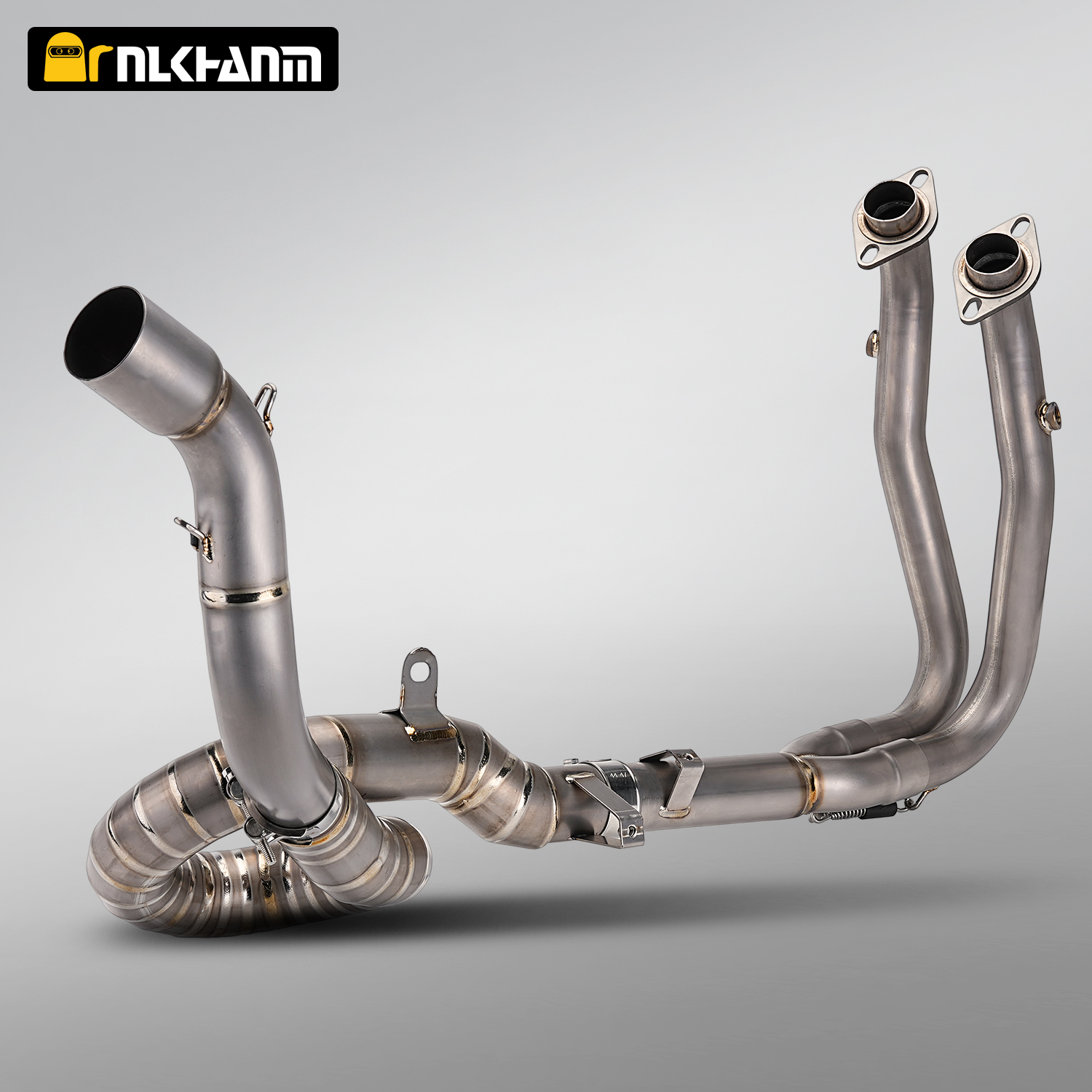
How is Carbon Fiber utilized in Jilang products?
Carbon fiber is another essential material in the Jilang arsenal, primarily used for mufflers, end caps, and heat shields. Unlike metals, carbon fiber is a composite material made of crystalline carbon filaments twisted together and strengthened by a binding resin.
The primary advantage of carbon fiber is its weight—it is incredibly light. However, its most rider-friendly feature is its low thermal conductivity. While a stainless steel or titanium muffler can burn skin instantly if touched after a ride, carbon fiber remains relatively cool to the touch. This makes it an excellent safety feature for passengers or for bikes where the exhaust is routed near the rider's legs.
Jilang uses carbon fiber to give their exhaust systems a modern, aggressive, and race-ready look. It effectively dampens high-frequency sound waves, contributing to a deeper, more resonant exhaust note that many riders crave.
Comparison: Stainless Steel vs. Titanium vs. Carbon Fiber
To help you decide which Jilang product fits your needs, here is a direct comparison of how these three materials stack up against one another in a manufacturing context.
Comparison Factor | Stainless Steel | Titanium | Carbon Fiber |
Weight | Moderate (Lighter than stock) | Ultra-light | Extremely Light |
Heat Dissipation | Good | Excellent | Low (Insulating) |
Durability | High (Rugged) | High (But brittle if impacted) | Moderate (Can crack on impact) |
Cost | Low/Medium | High | High |
Best Application | Daily riding, Touring | Racing, Track, Performance | Aesthetics, Heat Safety, Racing |
How does Jilang ensure the quality of these materials?
Sourcing the right raw materials is only the first step. Jilang employs a professional team of 50 people, including experienced engineers and technicians, to transform these raw materials into precision-engineered parts.
The manufacturing process involves advanced modern equipment that handles cutting, bending, and welding these metals with high precision. For example, welding titanium requires a specific environment to prevent contamination, while laying carbon fiber requires precise temperature controls for the resin to cure correctly.
Jilang’s supply chain management ensures that the stainless steel, titanium, and carbon fiber they receive meet strict quality standards before they ever hit the production line. This commitment to quality ensures that whether you are buying a slip-on for a Kove 800X or a full system for a BMW, the materials will perform as advertised.
Does Jilang produce exhausts for specific motorcycle brands?
Yes, the material choices mentioned above are applied across a wide range of compatible brands. Jilang manufactures specific systems tailored to the engine requirements and mounting points of major manufacturers.
Their catalog includes dedicated designs for:
European Brands: Ducati, Aprilia, BMW, Triumph, KTM, Benelli.
Japanese Brands: Yamaha, Kawasaki, Honda, Suzuki.
Other Markets: CFMOTO, QJMOTOR, Kove, Voge.
By tailoring the material thickness and pipe diameter to the specific bike model, Jilang ensures that the exhaust gas flow is optimized for that specific engine, regardless of whether the system is made of stainless steel or titanium.
Where can I find more information about Jilang products?
If you are looking to upgrade your motorcycle and want to browse the full range of stainless steel, titanium, and carbon fiber options, you can explore their catalog directly. Their website offers detailed specifications for each model, ensuring you find the perfect fit for your bike.
For a closer look at their product lines and compatibility, visit: https://www.nlkhanm.com/
What is the future of exhaust materials?
As motorcycle technology evolves, so too do the materials used in aftermarket parts. Jilang continues to innovate, staying abreast of market changes and customer needs. We are seeing a trend toward hybrid systems—using stainless steel for the headers (where durability against road debris is key) and titanium or carbon fiber for the muffler (to save weight at the rear of the bike).
By combining materials, manufacturers can offer the best of both worlds: the longevity of steel and the performance of exotic materials. Jilang's R&D team is constantly testing new combinations to provide riders with lighter, stronger, and better-sounding exhaust systems.
Conclusion
Choosing an exhaust system is a significant investment in your motorcycle. Understanding the materials used by manufacturers like Jilang helps you make an informed decision based on your riding style and budget.
Whether you opt for the rugged reliability of stainless steel, the featherweight performance of titanium, or the cool-touch technology of carbon fiber, Jilang utilizes high-quality materials to enhance your riding experience. With a commitment to innovation and a robust manufacturing process, they ensure that every pipe and muffler meets the demands of modern riders.
stainless steel exhaust systems Manufacturer
China titanium exhaust systems
Jilang Motorcycle Exhaust Systems

 English
 العربية
 Français
 Русский
 Español
 Português
 Deutsch
 italiano
 日本語
日本語 한국어
한국어 Nederlands
 Tiếng Việt
 ไทย
ไทย Polski
 Türkçe
 አማርኛ
አማርኛ ພາສາລາວ
 ភាសាខ្មែរ
 Bahasa Melayu
 ဗမာစာ
ဗမာစာ தமிழ்
தமிழ் Filipino
 Bahasa Indonesia
 magyar
 Română
 Čeština
 Монгол
 қазақ
қазақ Српски
 हिन्दी
 Slovenčina
 Norsk
Norsk Svenska
 українська
 Ελληνικά
 Suomi
Suomi עברית
עברית Latine
 Dansk
Dansk বাংলা
বাংলা Hrvatski
 Afrikaans
 Gaeilge
 Māori
Māori नेपाली
 Oʻzbekcha
 Беларуская мова
 ʻŌlelo Hawaiʻi
 íslenska
 Kinyarwanda


