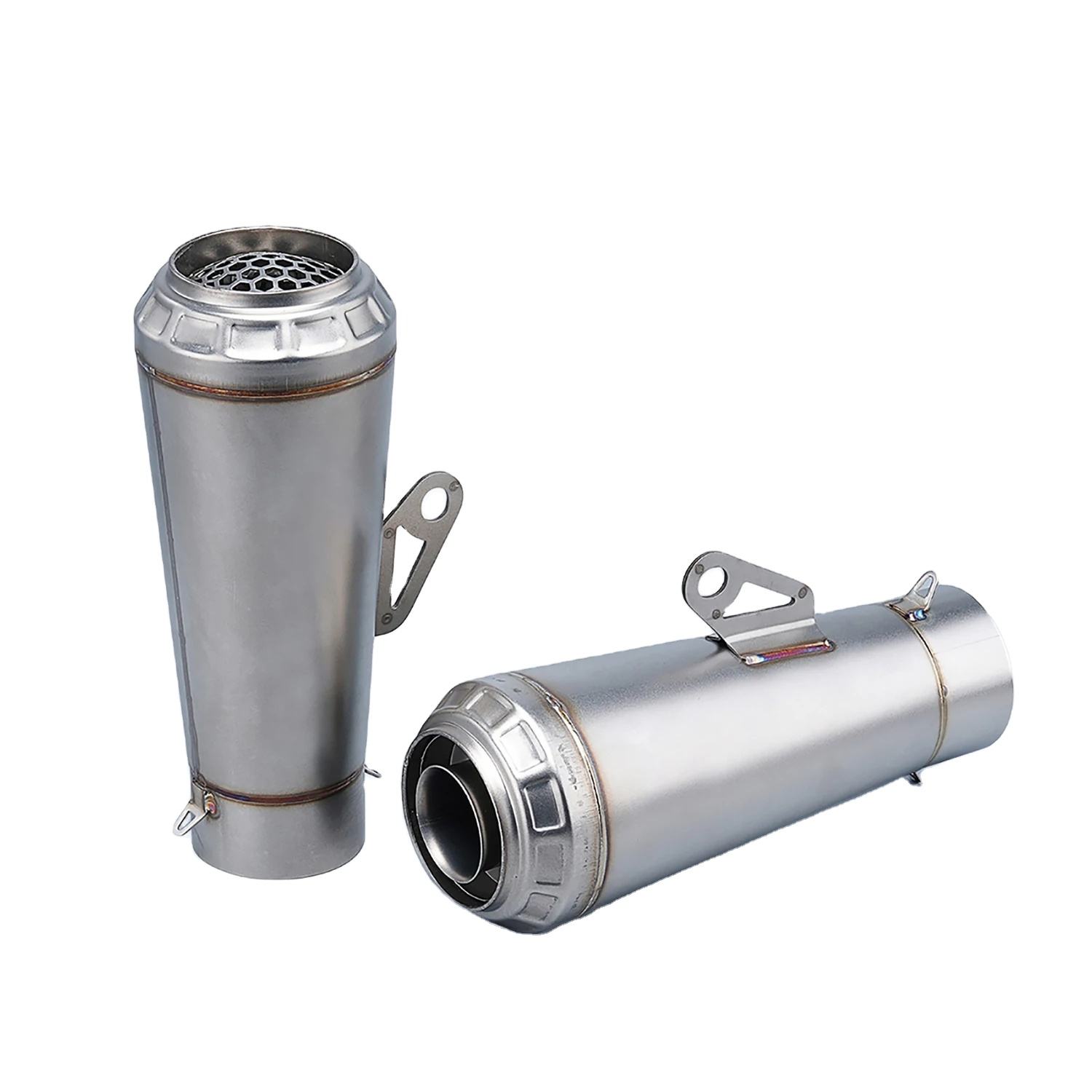
When you twist the throttle, you expect a specific reaction: a surge of power, a smooth engine response, and that signature deep, aggressive sound. But have you ever wondered what goes into creating that experience? A Motorcycle Exhaust System Muffler is more than just a steel tube attached to your engine; it is a precisely engineered component that undergoes rigorous testing before it ever hits the road.
For manufacturers like Jilang, ensuring the quality of an exhaust muffler with silencer involves a complex blend of materials science, acoustic engineering, and performance analysis. Whether you are a daily commuter or a track enthusiast, understanding these tests helps you appreciate the technology behind your ride.
Below, we answer the most common questions about how these critical components are tested and validated.
Why is rigorous testing necessary for a Motorcycle Exhaust System Muffler?
Testing is the only way to guarantee safety, compliance, and performance. A motorcycle exhaust system operates under extreme conditions. It handles high-velocity gases, intense vibrations from the engine, and rapidly changing temperatures.
Without proper testing, a muffler could crack under stress, restrict airflow (causing engine damage), or exceed legal noise limits. Manufacturers test to ensure the exhaust provides the advertised power gains and reliable corrosion resistance that riders expect.
How do engineers test for high-temperature resistance?
One of the primary enemies of an exhaust system is heat. To ensure longevity, manufacturers subject their prototypes to thermal cycle testing.
The Process:
Thermal Shock: The muffler is heated to extreme operating temperatures (often exceeding 800°F or 400°C) and then rapidly cooled. This simulates the expansion and contraction metal undergoes during start-up and shut-down.
Sustained Heat Load: The exhaust is run at high RPMs for extended periods to ensure the materials, such as the premium 304 stainless steel used by Jilang, do not warp or degrade.
This is particularly important for the internal components of an exhaust muffler with silencer, where packing materials must survive heat without blowing out over time.
What methods are used to ensure durability and structural integrity?
A motorcycle generates significant vibration. If an exhaust system isn't mounted and welded correctly, brackets can snap and welds can fracture.
Vibration Testing:
Manufacturers use "shaker tables" to simulate road conditions. The exhaust is bolted to a fixture that vibrates at various frequencies to mimic engine harmonics and road bumps. This ensures that theMuffler Silencer Boxed Escape Tail Pipe remains secure even during aggressive riding.
Corrosion Testing:
For daily riders, rain and road salt are constant threats. To test for this, parts undergo Salt Spray Testing. They are placed in a chamber and sprayed with a saline mist for hundreds of hours. This validates the corrosion resistance of the stainless steel or titanium finish.
How are sound levels and tone quality measured?
Sound is a defining characteristic of any motorcycle. Riders often want a deeper, more aggressive tone, but it must still be tolerable for long rides and meet track or street regulations.
Acoustic Testing Table:
Test Type | Objective | Equipment Used |
Static Noise Test | Measure decibels (dB) at a set RPM while the bike is stationary. | Decibel Meter |
Pass-By Noise Test | Measure noise levels as the motorcycle accelerates past a microphone. | Field Microphones |
Frequency Analysis | Analyze sound waves to tune the "note" of the exhaust (e.g., eliminating high-pitch rasp). | Spectrum Analyzer |
Jilang engineers use these methods to tune the internal baffles and chambers, ensuring the exhaust offers an ideal balance of performance and a rich sound profile.
How do manufacturers verify performance and power gains?
A Motorcycle Exhaust System Muffler is a performance part. Its job is to evacuate exhaust gases efficiently, reducing backpressure and allowing the engine to breathe better.
Dyno Testing:
The most common verification method is the Dynamometer (Dyno). The motorcycle is strapped down, and the rear wheel spins a heavy roller. Engineers run the bike with the stock exhaust and then with the new prototype. They look for improvements in:
Peak Horsepower: The maximum power the engine produces.
Torque Curve: How power is delivered across the RPM range.
Throttle Response: How quickly the engine reacts to input.
High-quality systems often show noticeable power gains in the mid-to-high RPM range compared to restrictive stock units.
What materials perform best during testing?
The choice of material dictates the weight, durability, and cost of the exhaust. Testing reveals distinct differences between common materials.
Material Comparison Table:
Material | Heat Resistance | Corrosion Resistance | Weight | Primary Benefit |
304 Stainless Steel | High | Excellent | Moderate | Durability & Value |
Titanium | Very High | Superior | Very Low | Race Performance |
Carbon Fiber | Moderate | Good | Ultra Low | Style & Weight Savings |
Jilang focuses heavily on premium 304 stainless steel for its optimal balance of durability and cost-effectiveness for the average enthusiast.
How does Jilang ensure consistent quality across its supply chain?
Testing a single prototype is one thing; ensuring every unit leaving the factory is perfect is another. Jilang utilizes a professional team of 50 experienced engineers and technicians to maintain strict quality standards.
Through a mature supply chain system, raw materials are inspected before they even reach the production line. During manufacturing, automated welding processes are monitored for consistency. Finally, finished products undergo visual and fitment inspections to ensure they install perfectly on specific models, such as the Ninja 250 or Z300.
Are fitment tests performed on actual motorcycles?
Yes. While computer-aided design (CAD) is essential, physical fitment is the final hurdle. Technicians install the Muffler Silencer Boxed Escape Tail Pipe on the actual target motorcycle models.
They check for:
Clearance: Ensuring the pipe doesn't touch the swingarm, fairings, or tires.
Mounting Points: Verifying that bolt holes align perfectly.
Ergonomics: Ensuring the exhaust doesn't interfere with the rider's boot or leg position.
This hands-on approach ensures that when you order a system for your bike, it fits right the first time.
Ready to Upgrade Your Ride?
Understanding the rigorous testing behind a Motorcycle Exhaust System Muffler highlights the difference between a generic pipe and a high-performance component.
If you are looking for an exhaust that has been engineered for durability, aggressive tone, and noticeable power gains, explore the range at Jilang. Whether you need a stainless steel upgrade or a titanium masterpiece, quality is tested into every weld.
Motorcycle Exhaust System Muffler
Muffler Silencer Boxed Escape Tail Pipe
exhaust muffler with silencer

 English
 العربية
 Français
 Русский
 Español
 Português
 Deutsch
 italiano
 日本語
日本語 한국어
한국어 Nederlands
 Tiếng Việt
 ไทย
ไทย Polski
 Türkçe
 አማርኛ
አማርኛ ພາສາລາວ
 ភាសាខ្មែរ
 Bahasa Melayu
 ဗမာစာ
ဗမာစာ தமிழ்
தமிழ் Filipino
 Bahasa Indonesia
 magyar
 Română
 Čeština
 Монгол
 қазақ
қазақ Српски
 हिन्दी
 Slovenčina
 Norsk
Norsk Svenska
 українська
 Ελληνικά
 Suomi
Suomi עברית
עברית Latine
 Dansk
Dansk বাংলা
বাংলা Hrvatski
 Afrikaans
 Gaeilge
 Māori
Māori नेपाली
 Oʻzbekcha
 Беларуская мова
 ʻŌlelo Hawaiʻi
 íslenska
 Kinyarwanda


