Upgrading your motorcycle's exhaust is one of the most impactful modifications you can make. A well-chosen system doesn't just change how your bike sounds—it affects performance, weight, and the overall riding experience. But with so many materials, configurations, and motorcycle exhaust pipe manufacturers on the market, choosing the right custom setup can feel overwhelming.
This guide cuts through the noise. You'll learn what makes stainless steel a strong contender for exhaust builds, how to evaluate custom stainless motorcycle exhaust options, and what to look for when sourcing from motorcycle exhaust suppliers. By the end, you'll have a clear picture of what to look for—and what to avoid.
Why Stainless Steel Dominates Custom Exhaust Builds
Not all exhaust materials are created equal. Mild steel corrodes quickly, especially in wet climates. Aluminum lacks the heat resistance required for high-performance applications. Stainless steel, by contrast, strikes a balance between durability, weight, and cost that few materials can match.
Here's a quick comparison of the three most common exhaust materials:
Material | Weight | Corrosion Resistance | Heat Tolerance | Cost |
Mild Steel | Heavy | Low | Moderate | Low |
Stainless Steel | Medium | High | High | Moderate |
Titanium | Very Light | Very High | Very High | High |
Carbon Fiber | Lightest | Very High | Moderate (with sleeve) | Very High |
Stainless steel sits in the sweet spot. It handles sustained heat without warping, resists the rust that plagues mild steel systems, and costs significantly less than titanium. For riders who want a long-lasting custom exhaust without paying a premium for exotic materials, stainless is the go-to choice.
Types of Custom Stainless Motorcycle Exhaust Systems
Before contacting any motorcycle exhaust suppliers, it helps to understand the different system types available. Each has a different impact on performance, sound, and installation complexity.
Slip-On Exhausts
A slip-on replaces only the muffler section. It's the most straightforward upgrade—quick to install, relatively affordable, and still capable of improving sound and reducing weight. If you want a noticeable change without a full system overhaul, a slip-on custom stainless motorcycle exhaust is a solid starting point.
Mid-Link Pipe Conversions
Mid-link upgrades sit between the header and the muffler. Switching this section to stainless steel or titanium can improve exhaust flow and reduce overall system weight. Many riders opt for a mid-link conversion when they want performance gains without replacing the entire exhaust.
Full System Exhausts
A full system replaces everything from the headers back. This is where the biggest performance and weight savings occur. It's also where the quality of your motorcycle exhaust pipe manufacturer matters most—inconsistent welds or poor fitment in a full system will affect the entire bike's performance.
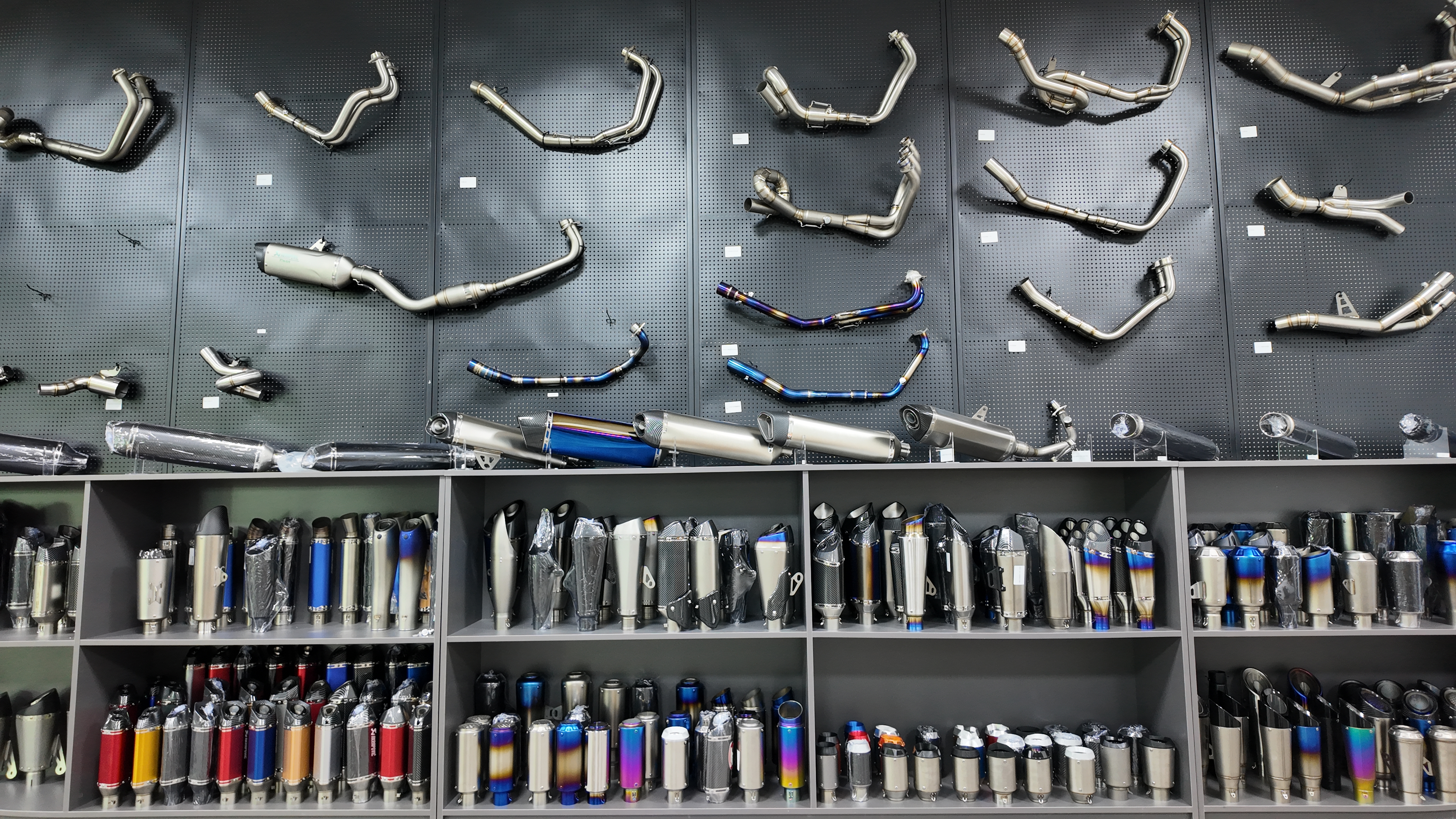
What to Look For in a Motorcycle Exhaust Pipe Manufacturer
Sourcing a custom exhaust is a decision that deserves careful thought. The right manufacturer will offer precise fitment, quality materials, and the engineering knowledge to back it up. Here are the key criteria to evaluate:
Manufacturing Experience and R&D Capability
A manufacturer with a dedicated engineering team can respond quickly to custom requests, adapt designs for specific models, and stay current with new bike releases. Look for suppliers who invest in product development rather than simply copying existing designs.
Material Consistency and Quality Standards
Ask about the grade of stainless steel used. 304-grade stainless is common for general use, while 321-grade handles higher sustained temperatures better. A reputable manufacturer will be transparent about material specifications and quality control processes.
Fitment Range
A broad fitment catalog signals manufacturing precision and experience. Suppliers who produce exhausts for Ducati, BMW, Kawasaki, Yamaha, Honda, KTM, and other major brands have had to meet the strict tolerances those platforms demand. That experience translates directly to better fitment on your build.
Production Capacity and Supply Chain
For bulk orders or ongoing supply relationships, production stability matters. A manufacturer with modern equipment and a well-managed supply chain will deliver consistent quality and reliable lead times.
Evaluation Criteria | What to Check |
Material Grade | 304 vs. 321 stainless, titanium alloy specs |
Weld Quality | TIG welding, internal bead consistency |
Fitment Range | Number of supported bike models |
R&D Team | In-house engineers vs. outsourced design |
Production Capacity | Equipment, output volume, lead times |
Quality Control | Testing processes, rejection rate standards |
Popular Configurations for Custom Stainless Exhausts
The right configuration depends on your bike, your riding style, and your performance goals. Here's a breakdown of common setups and what they're best suited for:
Configuration | Best For | Key Benefit |
Slip-On Muffler | Street riding, aesthetics | Simple installation, improved sound |
Mid-Link Pipe | Performance tuning on a budget | Better exhaust flow, weight savings |
Full System | Track use, maximum performance | Peak power gains, major weight reduction |
High-Level Exhaust | Adventure and motocross builds | Ground clearance, off-road protection |
High-level exhausts, which route the pipe up along the side of the bike rather than low under the frame, are worth considering for adventure touring or off-road applications. They protect the pipe from rock strikes and improve clearance on rough terrain.
How to Source From Motorcycle Exhaust Suppliers
Once you know the system type and configuration you need, the process of working with motorcycle exhaust suppliers becomes more straightforward. Here are a few practical steps:
Define Your Spec Clearly: Know your bike's make, model, and year. Specify the material, finish, and system type before reaching out. The more precise your brief, the more accurate the quote and the faster the turnaround.
Request Samples Before Committing to Volume: Any reputable supplier will accommodate sample requests. Inspect welds, check fitment tolerances, and test heat performance before placing a larger order.
Check Export and Certification Compliance: If you're sourcing internationally, confirm that the manufacturer's products meet the emissions or noise regulations applicable in your market.
Evaluate Communication Responsiveness: A supplier who responds slowly during the quoting stage will likely respond slowly when issues arise later. Use the initial inquiry as a test of their service standards.
One manufacturer worth considering is Kaiping Jilang, a China-based exhaust systems specialist with a team of 50 engineers and technicians. They produce high-performance stainless steel, titanium, and carbon fiber motorcycle exhaust systems for a wide range of brands—including Ducati, BMW, Kawasaki, KTM, Yamaha, and more—with a supply chain built for both domestic and international bulk orders.
Frequently Asked Questions
How long does a stainless steel motorcycle exhaust last?
A quality stainless steel exhaust can last the lifetime of the motorcycle when properly maintained. Unlike mild steel, it won't rust through under normal conditions. The key variable is weld quality—poorly welded joints are the most common failure point.
Can I run a custom stainless exhaust without an ECU remap?
A slip-on muffler swap usually doesn't require a remap. A full system replacement, however, changes exhaust back pressure enough to affect fueling—particularly on fuel-injected bikes. Skipping the remap in this case can result in a lean fuel mixture that reduces performance and risks engine damage.
What's the difference between 304 and 321 stainless steel for exhaust applications?
304 stainless is suitable for most street and light performance use. 321 stainless, which contains titanium as a stabilizer, handles higher sustained temperatures more effectively and is preferred for high-performance or track-focused builds.
Making the Right Call on Your Custom Build
A custom stainless motorcycle exhaust upgrade is worth doing right the first time. The material, configuration, and—critically—the quality of your motorcycle exhaust pipe manufacturer will determine how the system performs, fits, and holds up over time.
Do your research on motorcycle exhaust suppliers before committing. Ask the right questions about materials and manufacturing processes, request samples, and choose a partner with the engineering depth to support your specific build. The result will be a system that performs as well as it looks—and lasts as long as your bike does.
motorcycle exhaust pipe manufacturers
motorcycle exhaust suppliers
custom stainless motorcycle exhaust

 English
 العربية
 Français
 Русский
 Español
 Português
 Deutsch
 italiano
 日本語
日本語 한국어
한국어 Nederlands
 Tiếng Việt
 ไทย
ไทย Polski
 Türkçe
 አማርኛ
አማርኛ ພາສາລາວ
 ភាសាខ្មែរ
 Bahasa Melayu
 ဗမာစာ
ဗမာစာ தமிழ்
தமிழ் Filipino
 Bahasa Indonesia
 magyar
 Română
 Čeština
 Монгол
 қазақ
қазақ Српски
 हिन्दी
 Slovenčina
 Norsk
Norsk Svenska
 українська
 Ελληνικά
 Suomi
Suomi עברית
עברית Latine
 Dansk
Dansk বাংলা
বাংলা Hrvatski
 Afrikaans
 Gaeilge
 Māori
Māori नेपाली
 Oʻzbekcha
 Беларуская мова
 ʻŌlelo Hawaiʻi
 íslenska
 Kinyarwanda


