Every car enthusiast reaches a point where stock components just aren't enough. You want sharper handling, quicker acceleration, and a sound that announces your arrival before you even turn the corner. While there are countless ways to modify a vehicle, few upgrades offer the blend of aesthetic appeal, acoustic brilliance, and raw performance found in a titanium alloy exhaust system.
For decades, stainless steel has been the standard for aftermarket exhausts. It is durable, affordable, and accessible. But for those chasing the absolute pinnacle of engineering, titanium stands alone. This exotic metal, once reserved for aerospace engineering and Formula 1 race cars, has made its way to the streets, offering benefits that heavy steel simply cannot match.
If you are considering taking your build to the next level, understanding the specific properties of titanium is crucial. This guide breaks down exactly why a titanium alloy exhaust system is one of the most sought-after upgrades in the automotive world, how it compares to other materials, and what you can expect once it is installed on your machine.
The Science of Speed: Why Titanium?
Titanium is not just a fancy buzzword; it is an engineering marvel. In the context of automotive performance, we usually refer to titanium alloys, most commonly Ti-6Al-4V (Grade 5) or commercially pure titanium (Grade 2), depending on the specific component of the exhaust.
The primary reason engineers choose titanium is its strength-to-weight ratio. It provides the durability of steel but at roughly half the weight. When you replace a factory exhaust system—which can be incredibly heavy due to thick steel piping and restrictive catalytic converters—with a titanium version, you aren't just improving flow; you are drastically altering the vehicle's power-to-weight ratio.
Weight Reduction and Handling
Shedding weight is the most effective way to improve a car's performance across the board. A lighter car accelerates faster, stops shorter, and corners harder.
A full stainless steel exhaust system for a modern sports car might weigh anywhere from 40 to 70 pounds. A comparable titanium alloy exhaust system often clocks in at 15 to 30 pounds. Removing 30+ pounds from the underside of the car does more than just lighten the load; it lowers the center of gravity (if the exhaust is high-mounted) and reduces the polar moment of inertia, making the car feel more responsive during quick directional changes.
Material Comparison: Titanium vs. Stainless Steel vs. Inconel
To truly appreciate the value of titanium, it helps to see how it stacks up against the competition. Most aftermarket buyers are deciding between T304 Stainless Steel and Titanium. For the ultra-elite, Inconel is also an option, though usually reserved for hypercars.
Here is a breakdown of how these materials compare in a performance context:
Feature | T304 Stainless Steel | Titanium Alloy | Inconel |
Weight | Heavy | Ultra-Lightweight | Lightweight |
Heat Dissipation | Moderate | High | Very High |
Cost | Affordable | Expensive | Very Expensive |
Durability | High (can rust over long periods) | Excellent (corrosion-proof) | Extreme |
Sound Profile | Deep, classic tone | Exotic, metallic pitch | High-pitched, F1 style |
The Heat Advantage
Heat management is another critical factor. Titanium dissipates heat much faster than steel. In high-performance applications, keeping heat away from the differential, fuel tank, and rear tires is vital. Because titanium doesn't retain heat as long as steel, your car cools down faster after a track session, reducing heat soak in surrounding components.
The Exotic Sound of Titanium
Performance metrics are important, but let's be honest: sound is why we buy exhausts. A titanium alloy exhaust system possesses unique acoustic properties that set it apart from steel.
Because titanium is less dense and the tubing walls are often thinner than their steel counterparts, the material vibrates differently. This results in a distinctively crisp, metallic exhaust note. At high RPMs, titanium tends to produce a higher-pitched, "exotic" scream that is often associated with supercars. Stainless steel, by comparison, usually offers a deeper, bass-heavy rumble.
If you want your turbocharged vehicle to crackle and pop with clarity, or your naturally aspirated engine to sing at the redline, titanium provides a clarity of sound that thicker metals dampen.
Durability and the "Blueing" Effect
One of the most visually striking characteristics of a titanium alloy exhaust system is the color. When exposed to intense heat, titanium undergoes an oxidation process that changes its surface color. This is often called "blueing" or "burning."
Exhaust tips and piping can transition from silver to vibrant shades of gold, purple, and blue. While some manufacturers pre-treat the metal to achieve this look out of the box, a naturally driven titanium exhaust will develop a unique patina over time, serving as a badge of honor that proves the car has been driven hard.
Beyond aesthetics, titanium is impervious to rust. Unlike steel, which can corrode when exposed to road salts and moisture over many years, titanium maintains its structural integrity indefinitely. It is the same material used in medical implants and ocean-faring vessels because it simply refuses to degrade under normal environmental conditions.
Is a Titanium Exhaust Right for You?
Before dropping a significant amount of money on a new system, you need to weigh the pros and cons against your specific goals.
The Pros
Massive Weight Savings: The single biggest functional advantage.
Corrosion Resistance: It will likely outlast the car itself.
Aesthetics: The burnt-tip look is iconic in car culture.
Sound: Offers a unique, raspy, and aggressive tone.
The Cons
Cost: Titanium is difficult to mine and refine, and even harder to weld. This drives up the price significantly.
Repair Difficulty: If you crack a titanium exhaust (which is rare, but possible upon impact), you cannot just take it to a standard muffler shop. It requires specialized welding techniques and an oxygen-free environment to repair correctly.
Frequently Asked Questions
Does a titanium exhaust add more horsepower than stainless steel?
Generally, the material itself does not add horsepower. Horsepower gains come from the design of the piping—specifically the diameter and the smoothness of the bends which improve air flow. However, because a titanium alloy exhaust system is significantly lighter, the car feels faster and has a better power-to-weight ratio, effectively improving performance even if the dyno numbers are similar to a steel system.
Can I install a titanium exhaust myself?
Yes, most titanium systems are designed as "bolt-on" upgrades, meaning they use the factory mounting points. However, because titanium is sensitive to oils from your skin (which can burn into permanent smudges when the pipe heats up), it is critical to wear gloves during installation and thoroughly clean the pipes with alcohol before starting the engine.
Why is titanium so much more expensive?
The cost comes down to raw material scarcity and manufacturing difficulty. Titanium is reactive when molten, meaning it must be welded in an inert gas atmosphere (usually Argon) to prevent it from becoming brittle. This requires highly skilled fabricators and expensive equipment, driving up the retail price.
Upgrading Your Drive
Choosing the right modifications is about balance. If you are building a daily driver on a budget, stainless steel is a fantastic option that will serve you well. But if you are building a track weapon, a show car, or simply demand the absolute best components for your vehicle, a titanium alloy exhaust system is the gold standard.
It offers a transformation you can feel in the steering wheel, hear in the cabin, and see when you walk away from the car. It transforms a standard driving experience into an occasion. When every ounce matters and every decibel counts, titanium delivers.
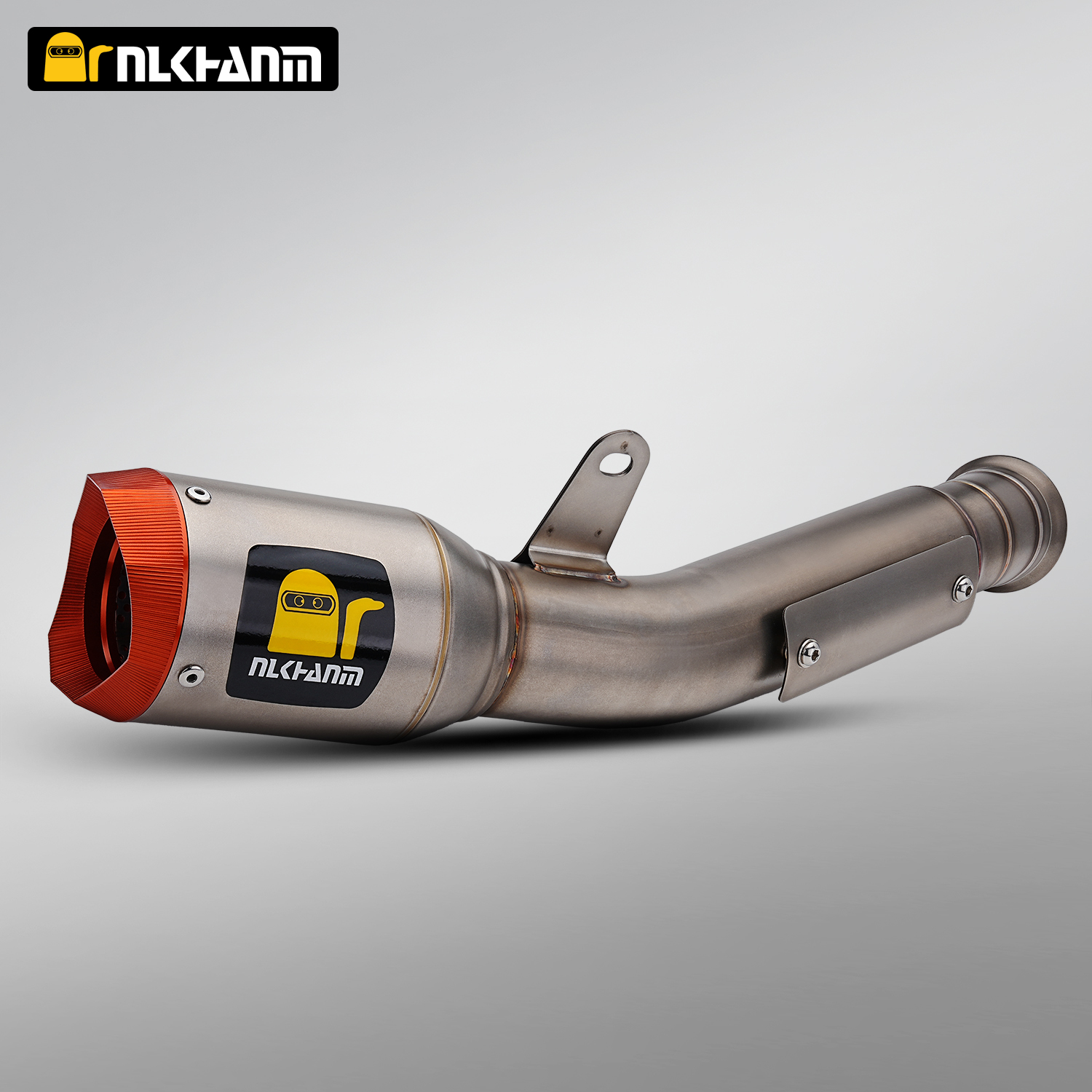
Titanium Alloy Exhaust System
universal motorcycle exhaust pipe muffler silencer chrome
Modified Motorcycle Exhaust Muffler

 English
 العربية
 Français
 Русский
 Español
 Português
 Deutsch
 italiano
 日本語
日本語 한국어
한국어 Nederlands
 Tiếng Việt
 ไทย
ไทย Polski
 Türkçe
 አማርኛ
አማርኛ ພາສາລາວ
 ភាសាខ្មែរ
 Bahasa Melayu
 ဗမာစာ
ဗမာစာ தமிழ்
தமிழ் Filipino
 Bahasa Indonesia
 magyar
 Română
 Čeština
 Монгол
 қазақ
қазақ Српски
 हिन्दी
 Slovenčina
 Norsk
Norsk Svenska
 українська
 Ελληνικά
 Suomi
Suomi עברית
עברית Latine
 Dansk
Dansk বাংলা
বাংলা Hrvatski
 Afrikaans
 Gaeilge
 Māori
Māori नेपाली
 Oʻzbekcha
 Беларуская мова
 ʻŌlelo Hawaiʻi
 íslenska
 Kinyarwanda


