
Views: 0 Author: Site Editor Publish Time: 2026-10-14 Origin: Site
Technically, you can drive a car without a muffler, but it's rarely legal and almost never a good idea. The muffler is part of your complete exhaust system, working to reduce engine noise and direct harmful gases safely away from the cabin. Without it, you risk fines, hearing damage, and even carbon monoxide exposure.
If you've ever heard a car rumble down the street sounding more like a race car than a daily commuter, there's a good chance its muffler is damaged, missing, or has been intentionally removed. Some drivers do this for a louder, more aggressive sound. Others simply haven't gotten around to fixing a rusted-out muffler that fell off during a pothole encounter.
Whatever the reason, driving without a muffler raises real questions about legality, safety, and the long-term health of your vehicle. This post breaks down what a muffler actually does, what happens when it's missing, and what your options are if you're dealing with exhaust problems right now.
A muffler is one component within your car's complete exhaust system, which also includes the exhaust manifold, catalytic converter, resonator, and exhaust pipes. Its main job is to quiet the sound of combustion happening inside your engine.
Here's how it works: every time your engine fires a cylinder, it creates a small explosion. Thousands of these explosions happen per minute, and each one produces a loud pressure wave. The muffler uses internal chambers and baffles to cancel out these sound waves before they exit through the tailpipe. Without this dampening effect, your car would sound deafening at idle, let alone at highway speeds.
Beyond noise control, the exhaust system as a whole also routes toxic gases like carbon monoxide away from the cabin and out of the vehicle. While the muffler itself isn't primarily a safety component, it's connected to pipes and seals that are.
In most places, no. Noise pollution laws exist specifically to regulate how loud a vehicle can be, and a car without a muffler almost always exceeds those limits. Many states and countries also classify a missing or modified muffler as an equipment violation, similar to driving with a broken taillight or cracked windshield.
Penalties vary depending on location, but typically include:
A fine for excessive noise or a faulty exhaust system
A mandatory repair order (sometimes called a "fix-it ticket")
Failed vehicle inspection, which can prevent re-registration
Some regions allow specific aftermarket exhaust components, like a flexible exhaust muffler pipe, as long as decibel limits are met. Others require OEM-spec mufflers for road-legal vehicles. If you're unsure, check your local transportation authority's noise and emissions regulations before making changes to your exhaust muffler pipe setup.
Even if you're willing to risk a ticket, there are real downsides to driving without a muffler.
Without the muffler's sound-dampening chambers, cabin noise increases dramatically. Over time, prolonged exposure to loud exhaust noise, especially on long drives, can contribute to hearing fatigue and discomfort.
A damaged or missing exhaust pipe muffler and pipe can sometimes compromise the system's ability to properly direct exhaust fumes away from the cabin. If gases leak near the floorboard or trunk, there's a risk of carbon monoxide entering the vehicle, which is a serious health hazard.
Mufflers are tuned to work with the rest of your complete exhaust system, including backpressure levels that help your engine run efficiently. Removing the muffler can throw off this balance, sometimes resulting in reduced torque at certain RPM ranges, even though some drivers assume removing it boosts power.
Exhaust systems are interconnected. A missing muffler puts additional strain on exhaust pipes, hangers, and the catalytic converter, which can accelerate wear and lead to costlier repairs down the line.
Component | Primary Function | Common Signs of Failure | Typical Fix |
|---|---|---|---|
Muffler | Reduces engine and exhaust noise | Loud rumbling, rattling under the car | Replace muffler unit |
Exhaust Pipe | Carries gases from engine to tailpipe | Visible rust holes, hissing sounds | Patch or replace pipe section |
Absorbs vibration between engine and exhaust system | Cracking, leaking at flex joints | Replace flex pipe | |
Catalytic Converter | Reduces harmful emissions | Rattling, "rotten egg" smell, failed emissions test | Replace converter |
Resonator | Fine-tunes exhaust tone | Drone or buzzing sound at certain speeds | Replace resonator |
This table makes it easier to pinpoint which part of your exhaust system needs attention if you're hearing unusual noises or noticing performance changes.
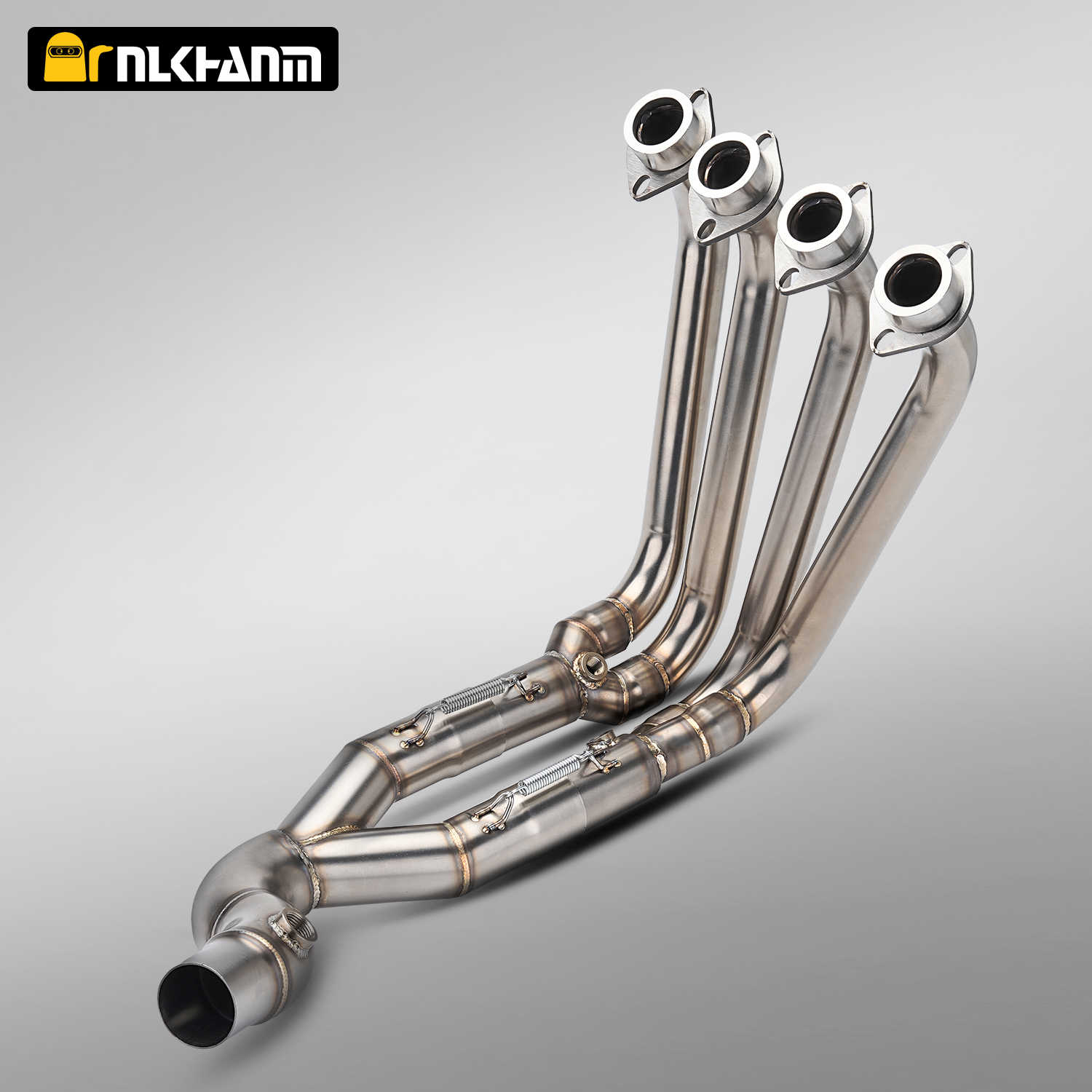
If you ride, you've likely noticed that motorcycle exhaust pipes are often louder than those on cars, and in many cases, that's intentional. Motorcycle pipe exhaust systems are frequently swapped out for aftermarket options that improve sound and, according to manufacturers, performance.
However, the same general principle applies: most regions regulate motorcycle exhausts under similar noise ordinances as cars. A motorcycle with no muffler, or with a stock muffler swapped for an uncertified aftermarket pipe, may be just as likely to draw a citation. If you're shopping for new motorcycle exhaust pipes, look for ones labeled as street-legal or EPA-compliant to avoid issues down the road.
If you're dealing with any of these signs, it's time to inspect your exhaust system:
A sudden increase in engine noise, especially a deep rumbling or rattling sound
Visible rust, holes, or hanging components underneath your vehicle
A noticeable drop in fuel efficiency
A strong exhaust smell inside the cabin
Failed emissions or safety inspection
Choose a full exhaust system replacement if your pipes are extensively rusted or if you're upgrading for performance reasons. Choose a single component repair, like replacing just the exhaust pipe muffler, if the rest of your system is still in good condition. A trusted mechanic can help you determine which option makes the most financial and mechanical sense for your situation.
Driving without a muffler might seem like a quick fix or an easy way to get a louder sound, but the tradeoffs rarely add up. Between legal penalties, potential health risks from gas exposure, and the added strain on your exhaust system, it's almost always worth repairing or replacing a damaged muffler rather than skipping it altogether.
If your exhaust system is showing signs of wear, don't wait for a complete breakdown. Have it inspected, identify whether the issue lies with the muffler, exhaust pipe, or another component, and get it fixed before a small repair turns into a bigger, more expensive problem.
Is it illegal to drive with a loud exhaust?
In most places, yes. Vehicles that exceed local noise limits, often due to a missing or modified muffler, can receive citations for excessive noise or equipment violations.
Can driving without a muffler damage my engine?
It can indirectly affect performance by disrupting the exhaust system's backpressure balance, and it places extra strain on other components like the exhaust pipes and catalytic converter.
How much does it cost to replace a muffler?
Costs vary widely depending on the vehicle and whether you choose an OEM or aftermarket part, but a straightforward muffler replacement is typically a moderate repair compared to replacing the complete exhaust system.
Are flexible exhaust muffler pipes a good replacement option?
Flexible exhaust muffler pipes are designed to absorb vibration and movement between the engine and exhaust system. They're a good option when that specific section is cracked or leaking, rather than a replacement for the muffler itself.
Do motorcycle exhausts follow the same noise laws as cars?
Generally, yes. Most regions apply similar noise regulations to motorcycle exhaust pipes, so an aftermarket motorcycle pipe exhaust should be checked for street-legal certification before installation.


